
A practical guide for parents navigating child voice acting, contracts, and A.I.
Audio work can be a brilliant experience for young performers. There are lots of opportunities, including animation, audiobooks and radio plays, video games, adverts, dubbing work and more. Unlike many stage and screen jobs, some recording sessions can be completed in a few hours, minimising time away from home or school.
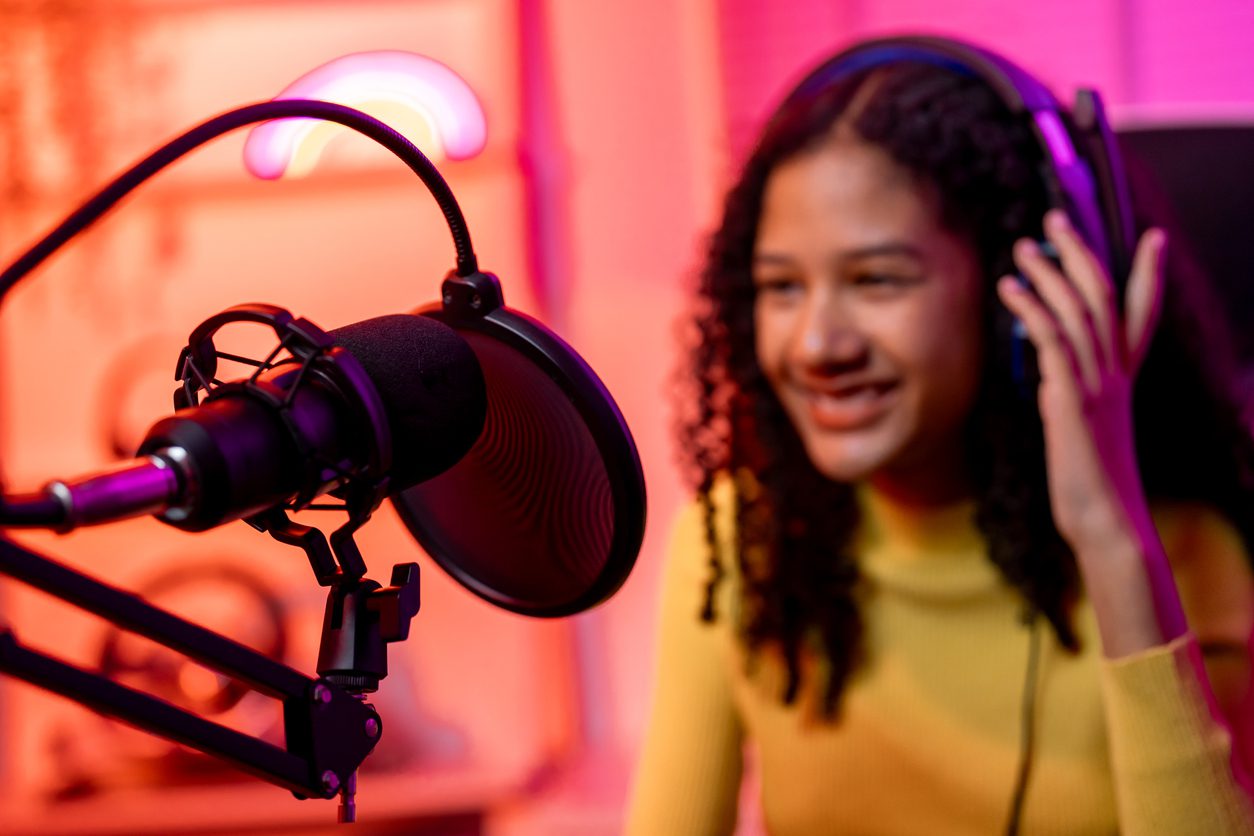
Voiceover work is a very different experience from other kinds of performing, and so requires different preparation and skills. Your child may be standing alone in a recording booth wearing headphones, responding to a director and being asked to repeat the same line many times with different energies and emotions.
Here’s what you need to know about audio and voice work:
The World of Voiceover
Audio work covers a huge range of jobs – your child could be recording a cartoon character, narrating an audiobook, or providing additional voices for a video game. There is also radio drama, dubbing and ADR (Automated Dialogue Replacement), commercials, educational content and all sorts of digital media.
One of the lovely things about audio work is that a child doesn’t have to worry about what they’re wearing or how they look on camera. For some young performers, that freedom can make it easier to concentrate on their acting.
Audio work can also be a good fit for children who find a busy film set or theatre overwhelming. A recording session is usually a smaller, quieter environment, with fewer people around.
Voice acting requires concentration, imagination and the ability to repeat lines many times while keeping the performance fresh and giving the director lots of options to choose from.
“I loved my experience of doing voice over for a cartoon. Seeing my voice come out of a bunny’s mouth was epic.” L, age 8.
“I love working with kids because they bring so much imagination to the room. They’re not worried about whether something is ‘right’ in the same way adults can be — they’ll just have a go, and sometimes they come up with something you never expected.” Amelia Oliver, Creative Director, 2020 Studios
Voice Casting
An audio audition is usually pretty straightforward. Your child may be sent a short script or a few sides and asked to record them at home. You don’t need to film them, just using the voice recorder software on your phone is fine.
If you’re recording at home, find the quietest room you can, away from traffic and other background noise. Soft furnishings or being surrounded by a duvet can help reduce echoes and improve the quality of the sound recording. A casting director isn’t looking for a studio quality recording – just something which shows your child’s voice.
If the casting director likes what they hear then a few children may be invited into a studio for a further round of auditions. This gives the Director the chance to see how the performer takes direction and, just as importantly, it allows the child to get used to the surroundings before the
first record.
What to Include in Demo Reels
A good demo (or voice reel) should show what your child can do. You can record this at home and stitch it together using freely available editing software.
If you’re putting together a basic demo reel, choose a couple of contrasting pieces of text – perhaps a short advert, some narration and a few lines of character work. Keep it short and let your child introduce themselves in their natural voice. You can record it on your phone – there’s no need to pay for this to be done professionally.
“Almost every child hates doing laughs when called for. If it is requested, tickling the child is not good practice. Thinking of amusing memories, doing silly things, asking the child to copy an adult’s laugh (starting with small snigger to getting louder) can all help a child find something that sounds natural. Even adult actors sometimes struggle with this. The key is letting go and accepting that this is a very silly thing
to do!” – A top tip from experienced voice director, Steve Cannon
Recording Sessions
If your child gets the job, the session might take place in a professional studio or remotely from home. In a studio, they’ll usually be in a recording booth with headphones, with the director and sound engineer communicating with them through the glass or headphones.
Ask the production what arrangements are being made for your child’s supervision and chaperoning. The requirements will depend on the circumstances of the recording.
Remote sessions can work in a similar way, using professional recording systems.
You may want to practice at home by giving your child very quick instructions, in the same way that a voice director would. Being able to listen, make an adjustment to a performance and then instantly have another go is a big part of being a good voice actor.
Don’t over-practice though, and try to avoid giving your child a ‘line reading – a way of speaking the line. The casting director wants to hear how your child performs the audition material naturally and what their own instincts are. If they get the job and you accompany them to the studio, let the voice director do their job and direct your child. Don’t give your own opinion of how you think your child should sound.
You may want to practice with your child so they get used to standing very still and not fidgeting – clothing rustles can get picked up by the sensitive microphones. The sound engineer will tell the child where to stand in the booth but if the child is very young you might want to practice standing on a particular visual marker at home and then take that marker with you on the day so that the child has something familiar that they’ve practiced with.
‘Pickups’ are additional recording sessions to replace or add lines after the main recording has finished. It doesn’t necessarily mean your child did anything wrong. Audio productions can involve lots of editing and changes before the finished programme is released.
“As a director, I want to hear intention, feelings and originality in the delivery of a line. I don’t want my child characters to have the same voice pacing and predictable intonations. They have to sound right in context, but be able to sound unique in the ensemble.” Steve Cannon, Voice Director
Looking After the Voice
A young performer may be asked to shout, scream, laugh, cry, make strange noises or repeat the same line many times. Although fun, it can put demands on the voice.
Make sure your child has access to water and isn’t trying to push through a tired or painful voice. A gentle warm-up can be useful before a session, particularly if the work involves lots of vocal energy. Breaks can help if the voice is getting tired.
Watch The National Theatre’s useful short vocal warm-up for actors.
If your child regularly experiences pain, persistent hoarseness or other problems with their voice, seek appropriate professional advice.
Licensing, Chaperones and Working Hours
Voiceover recordings are covered by child performance licensing rules, including recordings made at home. A licence will always be required where the child or another person receives payment for the child’s performance, or where the child is absent from school to make the recording.
If you’re unsure whether a particular job requires a licence, check with your Local Authority Licensing Officer before the session.
The child performance rules also cover working hours, rest breaks and other conditions intended to protect young performers.
For studio work, ask who is responsible for the chaperoning arrangements. For remote work, establish exactly who will be supervising your child during the session and what the production expects from you as the parent or guardian. If a licence is required, check who is responsible for applying for it.
AI and Usage
Before signing a contract, look carefully at clauses covering artificial intelligence, machine learning, synthetic voices, voice cloning, digital replicas and future use of recordings. Your child’s agent can support you with this.
A production may need permission to use your child’s actual recorded performance. That is different from giving someone broad rights to use those recordings to create a synthetic version of your child’s voice.
Don’t assume that because a contract says “voice” it means only the finished programme.
You should also find out where and for how long the recording can be used. A commercial might appear on television, radio, websites or social media, and the agreed usage might be very different from one job to another.
If it isn’t clear then ask the following:
“Can this recording be used to train an AI system or create a synthetic version of my child’s voice, and where can that voice be used?”
You should know the answer before agreeing to the job.
Red Flags
There are plenty of legitimate costs associated with developing a young performer’s skills. But parents should be cautious when someone says that payment is required before their child can access auditions or work.
Be particularly wary of:
- Agencies charging large upfront fees as a condition of representation
- Mandatory training
- Expensive demo reels presented as essential to getting work
- Contracts giving extremely broad or unclear rights to your child’s voice
- AI or voice-cloning clauses that you don’t understand
- Anyone putting pressure on you to sign immediately
Before You Say Yes
Before accepting an audio job, make sure you know:
- Is the recording in a studio or remotely?
- How long is the session, and what breaks will your child have?
- Who is responsible for chaperoning and supervision?
- Does your child need to miss school, and what licensing or permissions are required?
- Where will the recording be used, and for how long?
- Are there clear provisions relating to AI, voice cloning or synthetic voice use?
- What does the payment cover, including any buyout or additional recording sessions?
If you don’t know the answer to one of these questions, ask before the recording rather than afterwards.
The rules and industry practices around child performance and recorded media can change, so always check the most up-to-date guidance before agreeing to a job.
Download Sensible Creative’s fun Eye Spy activity for young children to take with them to the recording studio.
About the Writer: Rachel Barnett-Jones
Rachel is a writer, educator and arts advocate. As the founder of Sensible Creative, she is committed to dismantling the complexities of the professional arts and lecturing on the ethics of safeguarding to ensure that creatives, especially the most vulnerable, are protected, informed and respected.
By merging her creative practice with a tireless commitment to practical kindness, Rachel is currently working on a variety of projects which, she hopes, will make the arts a happier and healthier place to work.