
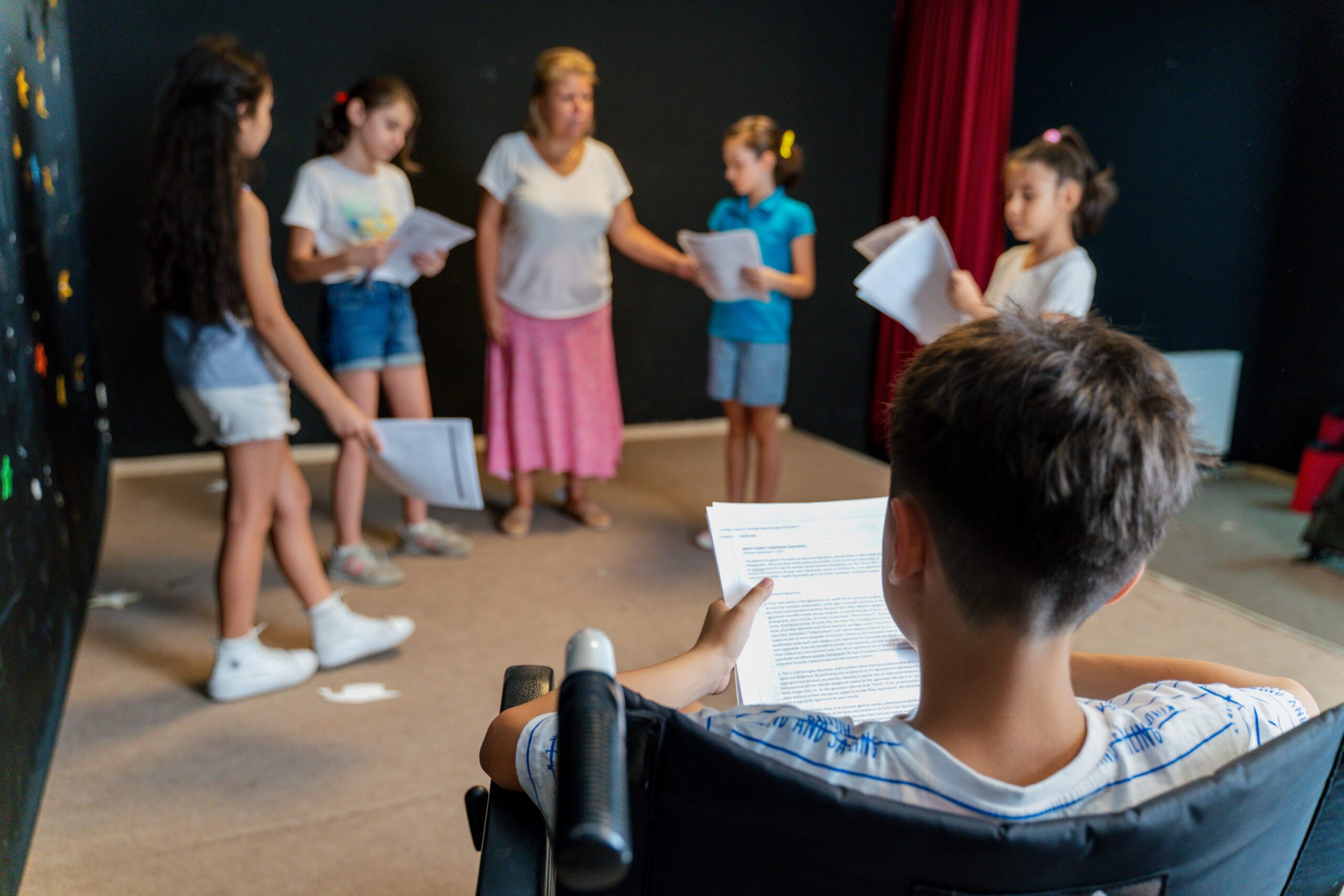
A parent’s guide to using Access Riders to support young performers in auditions, on set and stage
I’m Rachel Barnet-Jones and I run Sensible Creative – an advocacy organisation with the mission of making the Arts a happier, healthier and kinder place to work in for everyone. I’ve been working in the Arts as a writer, producer and lecturer for the last 20 years, mostly with young people and vulnerable adults. One of my main focus areas with Sensible Creative is supporting the parents of children who are performing professionally.
My own child acted professionally for a few years and one of the things that really helped both of us to navigate professional environments was having an access rider. This article below explains what an Access Rider is and how they might help.
A quick summary of the article’s contents for parents on the go:
- What it is: An Access Rider is a short, 1–2 page document detailing the specific support, adjustments, or communication styles your child needs to feel safe and do their best work.
- Who it’s for: As well as being highly valuable for children with disabilities, medical conditions, or neurodivergence, it can be used by any young performer to help production teams understand their needs.
- Why use one: It saves you from constantly repeating information, protects your child’s wellbeing (especially when you can’t be on set), and helps productions meet the legal requirements of the Equality Act.
- How to use it: Share the document as soon as possible with agents, casting directors, chaperones, and production teams so they can prepare before day one.
Handing your child over to people they don’t know, in a place they’ve never been before, can feel daunting – for you as well as for your child. If your child has additional needs or requires specific support, it can be even harder to know what information to share, who to share it with, and when.
Whether your child is working on a theatre production, a film or TV set, a voice over session or a photoshoot, they’re suddenly being dropped into an environment that is very different from school, home or everyday life. The people looking after them may only be working with them for a day or two. Even the most experienced production teams can’t be expected to know what your child needs … unless someone tells them.
That’s where an Access Rider can help. It gives you peace of mind that the people looking after your child have the essential information they need right from the start.
An Access Rider is a document that explains the things your child needs in order to feel comfortable and be enabled to do their best work. It can be shared with productions, agents, casting teams, chaperones, and anyone else responsible for your child’s welfare while they’re working.
It’s especially useful if you’re not going to be there yourself (for instance, if your child is being accompanied by a licensed chaperone or another family member). In those situations, an Access Rider acts as a practical guide to your child, allowing you to pass on the invaluable and unique knowledge that you hold as their parent or carer.
What is an Access Rider?
An Access Rider is a document that outlines any specific support, practical information, or reasonable adjustments that will help a performer do their job effectively and safely.
For some children, that might include information about a disability, a medical condition or neurodivergence. For others, it could be as simple as explaining how they communicate best, what helps them manage nerves, or what they need in order to stay focused and comfortable during a long day.
Although Access Riders are often associated with disability and access requirements, they can be useful for any young performer. Every child is different, and production teams appreciate having clear, actionable information.
Furthermore, under the Equality Act 2010, production companies have a legal duty to consider reasonable adjustments where they are needed. An Access Rider helps start those conversations early so that your child can feel confident and supported from the start.
When to Use an Access Rider
An Access Rider can be useful whenever there is information that would help other adults support your child more effectively. You might choose to use one:
- If your child has a disability, health condition, is neurodivergent, or has any other access requirement
- If specific adjustments help your child work confidently and safely
- If your child is working with people who don’t know them as well as you do
- If you won’t be present throughout the day and need others to understand how best to support them
- Before auditions and self-tapes, if adjustments could help your child perform at their best
- Whenever circumstances, or your child’s needs change and there is new information to share
How to Use an Access Rider
An Access Rider works best when it is shared early and treated as a practical guide. Keep these simple tips in mind:
- Share it early: Send it as ahead of time as possible so productions have time to put adjustments in place.
- Send it to the right people: Send it to the key people who will be working with your child, including agents, casting directors, production teams, chaperones, or tutors
- Focus on what helps them thrive: Clearly explain the support, adjustments or approaches that work. This may mean a quiet space during breaks, written instructions, advance notice of schedule changes, or permission to use noise-cancelling headphones
- Keep it positive and concise: Think of it as a living document that can be adapted for different situations rather than a rigid, one-off form. Aim to keep it to 1-2 pages so busy production staff can easily digest it.
What Information to Include
There is no single template that works for everyone. You don’t need to share everything about your child. Focus on the information that will help someone support them during an audition, rehearsal, performance or filming day.
Don’t worry about creating the ‘perfect’ document. Just think about the information you would want to know if you were responsible for someone else’s child’s for the day
As a starting point, you may want to think about:
- Sensory, emotional and physical needs
- Communication strategies that work best for your child
- Known triggers, challenges or situations that may require additional support
- Strategies that help if your child becomes overwhelmed, anxious or dysregulated
- Hair and make-up preferences
- Preferred pronouns and identity
- Anything that makes your child feel comfortable and at ease
Below, you’ll find a link to a more detailed guide that takes you through the process of creating an Access Rider step by step.
Access Rider Guide
Whether or not your child has formal access requirements, creating an Access Rider is an excellent way to start safeguarding their wellbeing at work.
Sensible Creative have created a brilliant, free resource to guide you through the process of writing one step by step.
Click here to download the Sensible Creative Access Rider Guide.
A Young Performer’s Experience
“I was happy to send my access needs before the audition as this meant that I didn’t need to worry about things. I was given the information I needed which was what the place looked like that I was going to and that I wouldn’t need to engage in small talk before my audition as this makes me anxious and I lose my focus.’ I felt more settled to audition and was able to be myself.” – Joseph.
Useful Links: for more information
- Triple A Performer’s Access Pack for Neurodivergent performers
- Spotlight Studios Access Pack and more information about our partnership with Triple A Performer
- The Hunt Academy for Young Performers’ Child Performer Access Plan blog
- Unlimited’s guide to creating your own access rider
- NNCEE (National Network for Children in Employment and Entertainment)
- UK Government (Child Performance Regulations)
- Equality Act 2010: Guidance (GOV.UK)
About the Writer: Rachel Barnett-Jones – Writer, Producer and Sensible Creative
Rachel is a writer, educator and arts advocate. As the founder of Sensible Creative, she is committed to dismantling the complexities of the professional arts and lecturing on the ethics of safeguarding to ensure that creatives, especially the most vulnerable, are protected, informed and respected.
Her work as an advocate is built on a career of world-class storytelling, with writing credits spanning television (Sky Kids’ ‘Pip and Posy’, S4C/ITV’s ‘Tiny Buds’), audio (Tonies, Lapland UK), and international theatre (Polka, Chichester Festival Theatre, Singapore Repertory Theatre, York Theatre Royal), as well as her work as a producer, educator and researcher.
By merging her creative practice with a tireless commitment to practical kindness, Rachel is currently working on a variety of projects which, she hopes, will make the arts a happier and healthier place to work.