
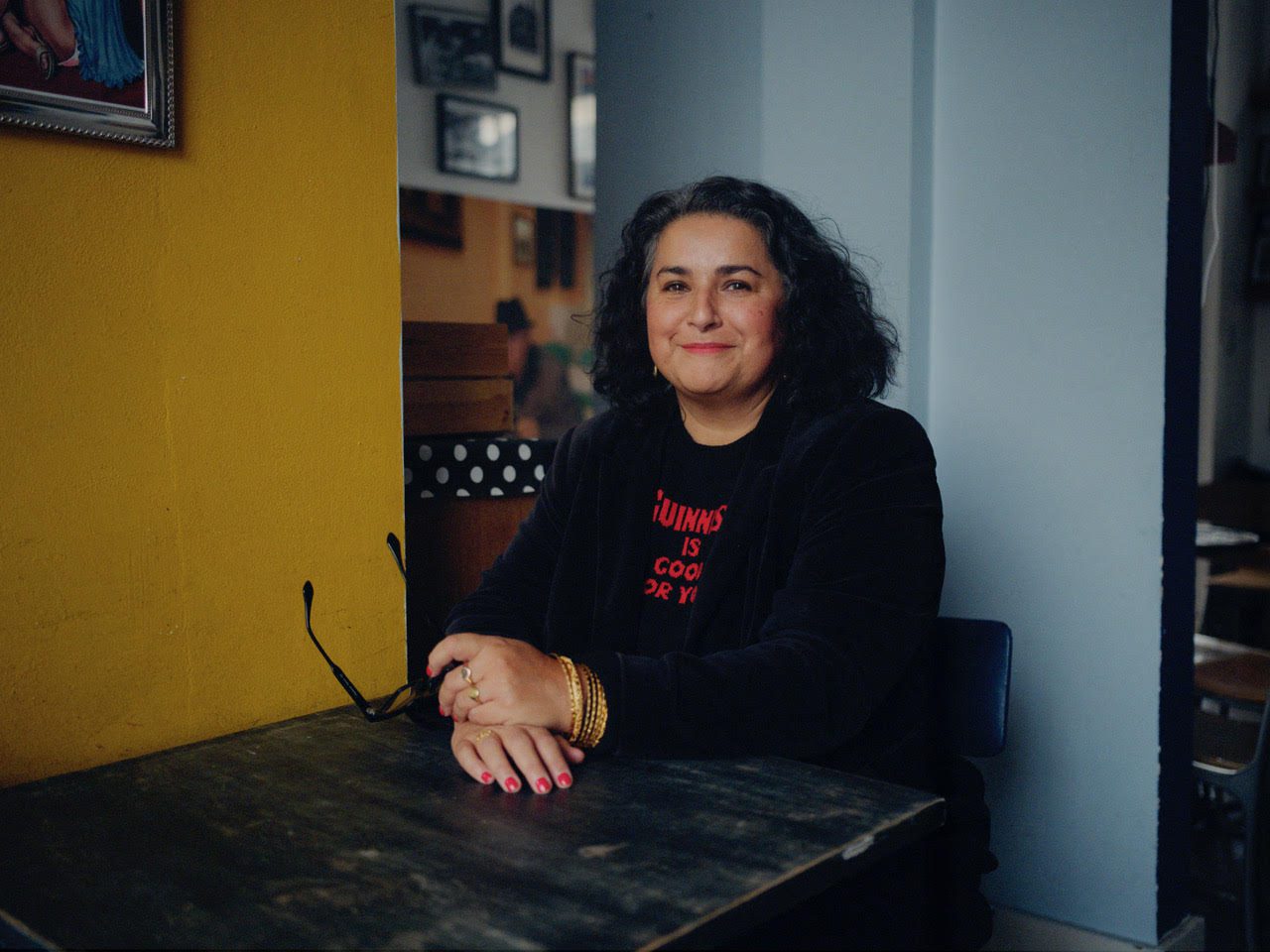
Shaheen Baig on spotting raw talent, defying typecasting and the unique craft of casting
Behind every unforgettable on-screen performance lies a casting director who saw something no one else could. For over three decades, Shaheen Baig has been the quiet force reshaping British film, television and theatre.
Known for her eclectic taste and an uncanny eye for raw, transformative talent, Baig has helped launch the careers of Florence Pugh, Tom Holland and George MacKay. From her iconic, left-field choice of Cillian Murphy to lead Peaky Blinders to her recent award-winning work on the immersive hit series Adolescence, her choices don’t just fill roles – they define culture.
Fresh off receiving an honorary fellowship from the National Film and Television School and casting Bait – a groundbreaking, sharp-witted new comedy series with Riz Ahmed – Shaheen sat down with us to talk about her career and demystifying the elusive craft of casting.
In this interview you’ll discover:
- The “chemical connection” Shaheen looks for in auditions
- The reality of navigating industry financiers
- Why she believes true representation in the industry is a continuous mission
- Tips for making the most of your Spotlight profile
Hi, Shaheen! How did you first get started in casting?
My first job in the industry was working for a producer and a writer as an assistant. I did that for a couple of years and realised it wasn’t quite for me, but an element of the job that interested me was the actors. I started asking around on the production that I was assisting on and somebody knew Debbie McWilliams and she was actually looking for a new assistant. At the time, Kate Rhodes James was her assistant and was setting up on her own.
I met Debbie and she was so kind to me. I had no experience in casting at all, but I did watch a lot of films – European films in particular – and I think that’s where we connected because Debbie loves European cinema. She took a punt on me and I worked with her for a few years before going on to work with Jina Jay.
How do you decide which projects to pursue?
If someone were to look at my CV, they might think it’s quite eclectic, but that’s on purpose. I like being eclectic because, essentially, I want to do the things that really inspire me or push me in a direction that I’ve not gone in before. For me, it’s about who the people are who are making it and what the story it’s about – I gravitate towards stories that I feel a personal connection to.
I really want to see regionality and representation in storytelling and feel that I’m contributing to something that feels different or challenging. Casting directors, like actors, can get typecast and I just want to make sure that I’m not doing the same thing all the time.
I really love working with people at the beginning or the early days of their career. Whether it’s a director, a writer, or an actor, there’s something very special about being at the start of their journey.

Owen Cooper on the set of ‘Adolescence’ – now on Netflix. Image credit: Ben Blackall / Netflix
You have an incredible eye for finding new talent, like Owen Cooper and George MacKay. What’s your process and what qualities do you look for in an actor?
Looking for new talent is really just looking for someone that brings their own voice, their own individuality and to not be frightened to do something different, ask questions or slightly challenge. On camera, it’s a chemical thing that sometimes happens. Because the camera’s right up close to your face, there’s a quietness. A stillness. It’s more of a muted quality. On stage, it’s a physical thing. An actor can have a really incredible physical charisma that means on stage they’re much more effective.
I just love actors that are really truthful. I know it’s a slightly overused word, but I love really truthful, natural actors who are constantly listening and open to playing around with stuff and doing things differently. I remember seeing George MacKay in his school when he was nine years old. I remember the first time I met Florence Pugh, Tom Holland – you meet all these people in your life and they stay with you. Even if you go on quite a long casting journey for a role, if a person has made a real impact, you go full circle and come back to them.
I feel immensely proud looking at Wunmi Mosaku. I cast Wunmi years ago in one of her first films [I Am Slave] and I feel immensely proud of her. She’s such a great actress and finally it feels like everyone’s woken up to that fact and she’s getting amazing roles, as she should. I feel nothing but pride.
You’ve won several awards recently for your work on ‘Adolescence’. What has this meant for you and your career?
It’s such a slightly discombobulating feeling because I’ve been working for years and years and then all of a sudden this year, primarily because of Adolescence, I’ve had a huge amount of attention. It’s a lovely thing and it’s amazing for projects and actors to be acknowledged and for casting to be acknowledged, but I don’t particularly like the spotlight on me because it’s always about the work.
The thing that I’ve realised over the past year is the focus on how the casting for Adolescence was done. That, for me, can only be a positive thing because people are talking about the craft. I’ve had to do quite a lot of press and interviews about Adolescence and the thing I’ve enjoyed the most has been talking about the process of casting and how somebody gets cast. I think that it demystifies what we do and makes it more accessible.
It makes somebody listening to an interview or reading an interview in a paper think that they might be able to do it as a career. Whereas for quite a long time, because casting is a little bit of a closed shop, I think it’s been really hard for people to see it as a career choice.
It’s lovely to win awards and for your work to be recognised, but I think it’s even greater for people to be celebrating and understanding what casting is.
Why do you think ‘Adolescence’ resonated with audiences the way it did?
I think it’s a combination of the story, which was very timely, and the immediacy of how it was created and the way it was shot. It was a fully immersive piece of television that, from the moment it started, you had to commit to. I think that’s rare in television because often those watching can pause, rewind, flip channels, or get bored five minutes in. But because of the way this show was made, people committed from the get-go.
The story was very accessible and for anybody with a young person at home, it felt very familiar. It wasn’t trying to lecture or look down on anybody. It just felt like a very honest, non-judgmental tale about something that’s happening and relationships that are happening among young people. It’s that very rare moment where television is able to tap into exactly what’s happening in society.
How did it feel to receive your recent honorary fellowship at the National Film and Television School?
I never thought that I would be the recipient of a fellowship – it feels very adult and grown-up! I was a little bit gutted that we didn’t have to wear a mortarboard and gown, but I got over that.
It’s a very special thing, particularly for me, to be recognised alongside Jina Jay because Jina was one of the very first people who took a chance on me and I worked with her for nearly eight years. She’s an extraordinary casting director and [together] we developed the course for the NFTS, so they have been incredibly good to us and continue to nurture the course. I wish my mum and dad were still alive to see that because it’s like a proper achievement. It’s the sort of thing your parents could be like, “Okay, you’ve got a fellowship, you’re a fully-fledged adult.”
You also cast Cillian Murphy in ‘Peaky Blinders’, who is now synonymous with ‘Tommy Shelby’. What was it about his initial audition that convinced you he could lead that series?
It’s interesting because with the film coming out, I’ve been reminiscing a little bit and it’s 13 years since we did Series 1 of Peaky. It was the first episodic television series I cast and I remember at the time when I was offered the job being excited because it was in my hometown and I’ve never cast anything in Birmingham. I was also nervous because I hadn’t cast television like that before.
We discussed lots and lots of actors for ‘Tommy Shelby’, but Cillian is this extraordinary silent movie star who can convey huge amounts without saying anything. There was a lot of conversation back and forth and a lot of persuading for everybody to go, “Okay, let’s look at Cillian seriously.”
He met with Steve [Steven Knight] and Cillian was already quite experienced, so he didn’t need to read, but we really needed to see if he’d be willing to take on this role that could end up being a bit of a journey. Thankfully, Steve was totally into it after he met him. Cillian was very persuasive.
I remember at the time I thought, “Okay, we’ve got Cillian and, in a way, that sets out our stall.” It was a left-field idea as he hadn’t done television before, so he wasn’t a familiar face on television, but he just perfectly fit the world. He’s as powerful in his performance when he’s not speaking as when he is – that’s the sign of a great actor. He’s a brilliant storyteller.

Cillian Murphy on the set of ‘Peaky Blinders’ – available now on Netflix. Image Credit: Robert Viglasky / Netflix
What does a typical audition process with you look like?
It slightly differs depending on whether someone’s taping or someone is in the room. When someone’s coming into the room, our job is to make the actor feel as comfortable and as confident as possible. Auditions are weird things and everybody’s nervous – the actor’s nervous, I’m nervous – we all want that meeting to go as well as it can go.
If somebody’s taping, we’ll try to give them as much backstory or as much of a sense of tone in advance to help them. Obviously, on Zoom and in the room, we’ll do that with them, too.
I always say – and the same thing applies whether it’s a self-tape or it’s a Zoom – I’m not looking for a perfect reading because there’s no such thing. It’s a sketch of something. What we’re doing in the room or on Zoom, or what an actor is doing themselves on a self-tape, is a sketch. You’re playing with something. You’re trying different things. And I think sometimes actors put this pressure on themselves to think they have to deliver a perfect tape there and then. It doesn’t exist.
I just want actors to come into the room feeling that they’re as informed as they possibly can be, so they understand who they’re meeting. If they’re meeting the director, then they’ve done a bit of research on who that person is so they’ve got a sense of them and they’re as familiar as they can be with the material they’ve been given and they ask questions. I don’t want an actor sitting in an audition and not being able to ask questions. And equally, if they’re taping, if they receive an email and they receive material that isn’t clear to them, ask questions because we will always answer.
Come into the room knowing that the people in there are on your side. They want you to do the best you can do. I’m not going to bring an actor in, wanting them to get it wrong. It’s a vulnerable thing to come in and audition, so it’s our job to make sure that the environment feels safe. You might be meeting a casting director you’ve not met before or a casting team or a director, but it should always be enjoyable. I always want an actor to leave that room feeling like they did the best they could in that moment because that’s all you can hope for.
How do you balance your creative gut feeling with a director or producer’s vision for the character?
It’s often a slow dance between the director, the producer, sometimes the writer and the financiers – everybody has a say in casting now. It’s my job to fight for the people I believe in and to challenge the director and put different types of people in front of them to maybe try and reimagine what’s on the page, or how a certain role might be perceived.
Then I have to slightly leave it to chance because someone could come in on day one of auditions who I think is absolutely perfect for the role, but the director might just not see it. I respect where the director’s coming from and it’s my job to listen to them to try and interpret what I think it is they’re looking for.
I’m not a pushy person. I’m not someone who’s going to tell the director, “You’re wrong. This is who you should cast. You’re making a big mistake,” because ultimately it’s the director on set directing the actor, so they have to believe in them. Nine times out of ten, they come full circle and go back to the person that we saw on day one who was absolutely right for the part. And sometimes they don’t. As a casting director, it can be heartbreaking because you have to lick your wounds and go, “Okay, okay, then we just see it differently.”
But then it’s my job to try and find out the way the director is looking at the actor they want and get on board with that. I have to, because otherwise you just make yourself miserable and then it becomes this sort of conflict. So, it’s my job then to really talk with the director and to understand why they want that person rather than the other actor. And then we always meet in the middle; we always find what’s right for the show or the film.
And sometimes financiers decide who that person is. And again, I don’t always agree with it, but you have to find peace with it, because some things are out of everybody’s control and it could make all the difference as to whether that film will get made or not. I think sometimes when people are watching television or film and they’re really critical of an actor, they don’t understand the journey that everyone involved has gone on in order to get that film made, financed, or that television show greenlit. Sometimes, we might have had to compromise and go for an actor who is brilliant in the role but may not have been the first choice, or may not have been the person that the director dreamed about for a year.
But the actor that you see on screen is the person that gets it over the line. Everyone has to sort of believe in that, commit to that and go with it. It is interesting when you see critiques, particularly from regular people watching the telly, and you just think, “Gosh, you don’t know, you have no understanding of the journey to get to what you see on screen.” It can be very difficult, particularly in film when you’re trying to get films financed.
And also, just because someone isn’t your third or fourth choice doesn’t mean they’re not right. Often that is a way you can discover people or you can change the course of someone’s career, because they might be doing comedy and this could be a really serious, dramatic role. So all kinds of brilliant things can happen on that journey – nothing is wrong, even if it’s different from what the director might have imagined when we were developing the project.
How can actors achieve that sense of connection with casting directors through self-tapes?
Obviously, it’s tricky and I know that actors are feeling fatigued about self-tapes. The positives of self-tapes are that it’s opened up the industry. It means that somebody who’s in Glasgow doesn’t have to get on a train that’s going to cost them nearly £200 to get to an audition in two days’ time. It’s made it much more accessible and it means that we can consider actors from all over the country without worrying about people putting their hand in their pocket, so I think that is a really, really great thing.
I do think we have to take the care around self-tapes much more seriously, and in our office, we try to offer as many Zoom calls as possible. We’ll often say you can tape or Zoom, especially in the first round of something, because obviously on a Zoom we’re interacting and we’re talking about it. If someone’s taping, we’ll just try and send them as much information and context as we can and always say to agents, “Please can your client ask us questions so that we can help them?”
Sometimes, if actors are brand new, we’ll say come into the room because I think it’s tough when you’ve just graduated and you haven’t actually been in a casting room yet.
How can actors stay open in auditions while also taking care of themselves?
I think what often happens is actors are getting overwhelmed by the amount of tapes they’re being asked to do. Go, “Okay, I’ve got four tapes to do this week, I’m going to spend X amount of time with them.”
Be really strict with yourself, so it doesn’t feel overwhelming. It’s like if you’re working from home – sometimes there are no boundaries and you forget to go and have lunch or to go for a walk and get some fresh air. I know I’m guilty of that.
Try to manage your time in the same way you’d be managing it if you were coming into the room. Sometimes the temptation for an actor could be to do 20 takes, but you wouldn’t do that if you were in the room; you’d probably do three or four maximum. If you do four, choose two or three and send them to your agent to help you choose – because agents, I hope, are watching your tapes. Don’t be afraid to police yourself; you don’t have to send us everything.
Give yourself some boundaries and if you can’t get the tape in for when the deadline is, ask your agent to talk to the casting director and be really honest – rather than putting this ridiculous amount of pressure on yourself to try and get something over the line. You get it over the line, but at what cost to you?
What tips can you give to experienced actors who are looking for their break?
If you’re on Spotlight, always look quite seriously at what’s on your profile. Look at your photographs and how old they are. I know it sounds basic, but do your photographs still look like you? Because that is one of my bugbears. Sometimes, an actor will come into the room and they are completely different to their photographs.
I personally like photographs of actors that are really natural, that show them as they are, rather than being heavily lit or stylised with lots of make-up, because I think it can sometimes give you a slightly false sense of someone. There also doesn’t need to be loads of photos – two at maximum – but make sure that photograph is kept up to date.
People spend a huge amount of money on showreels and I don’t think you need to. I would much rather see a couple of clips of very specific things that the actor is really proud of, rather than loads of clips of everything they’ve ever done cut together. Ultimately, a casting director is going to want to zone in on the thing that you have shone in the most.
Look at your credits and think, “What are the jobs that I’m most proud of or that I grew the most on?” Those are the clips that we want to see.
If you’re an older actor and you want to change things up, it’s even more important to look at what material you’ve got on there because the material on there might be really old. So, what have you done in the last couple of years that is much more reflective of who you are now? Or if there’s something that you’ve just done but you don’t have material for yet, write a little blog in the highlights section stating that you’ve just wrapped on this or you’ve just performed in that. I think that’s really key. It’s about making sure that everything on Spotlight is as current as it can be.
Write to casting directors and be really honest about where you are in your life and your career, and what it is that you’re looking for, because I love an honest email. We’re all different, aren’t we? You’re not just writing to the casting director, you’re writing to their team, so look at who works with them. You’re more likely to get a response from an assistant or an associate because they might have a little bit more time to respond to you. Succinct and truthful emails will always be the best ones.
I never look at social media before deciding if I’m going to cast someone. Instagram, for example, can be a brilliant thing in terms of culture and looking to see what’s happening. I love it for art, music and film and we’re all educating each other and that’s brilliant, but I have no interest in what an actor’s profile is on social media. I’m interested in who they are as an actor, and what they do when they come into the room or do a tape. Social media might be important for commercials or branding, but for narrative casting, for me, it’s irrelevant. And also, you can say no to social media. That’s also a really powerful thing to do.
You’re currently working on a new comedy series called ‘Bait’ with Riz Ahmed. What can you tell us about the project?
Riz is just brilliant. I have so much love and respect for Riz; he’s constantly changing direction and trying new things. He developed Bait for a really long time with his production company. It’s a passion project and what a joy for me to cast a show that is pretty much an entirely brown cast. That is joyful and it doesn’t happen very often. It’s quite an international cast, so there’s loads of talent in there that maybe people haven’t seen before. Guz Khan is in it, so it’s definitely going to be a riot.
The subject matter is very current. It’s really funny but it’s also challenging and, at times, makes you uncomfortable. You’re laughing and you’re like, “Am I okay to laugh?” I just love that. With all the work he’s doing, Riz is making you think left of centre. I hope it provokes conversations and challenges stereotypes and things in the industry.
How have you seen the industry change during your time as a casting director in terms of diversity and authentic voices?
How long is a piece of string to have that conversation? I’m slightly allergic to the words diversity and representation because they’re so loaded. I would love the industry to be recognising and telling stories of us in all the shapes and forms that we come in, but we’re not there yet. We’re definitely in a better place than we were last year, but we’ve got a huge way to go.
I think we’re all responsible for changing the way we tell stories, whether we’re in front or behind the camera. We need to be looking at who the people are who are making the decisions about what stories get told and where people are looking for talent. Where are people looking for new writers and how are people who have more struggles than most going to be nurtured? What support system is there for them? I think we need to look at all those things because it’s actually quite privileged to be able to write a drama or a play or a film, or to go to drama school.
As an industry, we have to really look at training and education. We have to look at where the barriers are in our industry and how we can break those barriers down to be much more welcoming and encouraging. We need to push out into the regions and push out into the pockets of communities that are still waiting to be discovered. England is such a brilliantly multicultural country and I just hope we continue to try and see that on screen and on stage as much as possible.
For casting directors, it’s about keeping on saying, “Maybe we could reimagine this,” and asking if gender, heritage, disability – all of these things – are being looked at. It’s our responsibility to keep pushing, keep asking questions and keep saying, “But why?”
There are lots of people and organisations doing great work, but there’s not a ceiling to this; it’s a continual thing. I sometimes think people assume if you have a scheme, that’s enough. It isn’t, because we’re not all on equal ground, and until we are, it’s not done.
Finally, what’s been your favourite production to work on in your career so far and why?
That’s almost an impossible question to answer really because I love so many of the projects I’ve done! They’ve all taught me different things. If I had to boil it down to one, I’d probably say a film very early in my career called Control, which was about ‘Joy Division’ and was directed by Anton Corbijn, who’s an extraordinary photographer. It was one of the first films I did when I went out on my own as a casting director and it was this perfect alchemy for me because I love music, I love photography and I love film.
I felt very lucky to be asked to cast that film at that point in my career because it was the thing that I dreamed of. It was a very inspiring process for me and it taught me a huge amount. I made friends for life and I will never forget that experience because that can’t be recreated.
Key takeaway tips from Shaheen Baig for improving your Spotlight profile:
- Keep your headshots natural: Avoid heavily lit, overly stylised, or high-glamour photos with lots of make-up. Shaheen prefers natural photographs that show exactly who you are.
- Pass the “reality check”: Make sure your current photographs actually look like you right now. Walking into an audition room looking completely different to your headshot is one of her biggest industry bugbears.
- Be ruthless with photo quantity: You do not need to clutter your profile with countless headshots – limit your photos and ensure they stay current.
- Ditch the expensive montages: You don’t need to spend a fortune on a showreel that cuts together every single piece of work you’ve ever done, focus on clips where you shine.
Update your highlights section: If you’re an experienced actor looking to change direction and don’t have new footage yet, write a quick update in your highlights section (e.g., stating that you have “just wrapped” or “recently performed” in a specific project) to keep your profile current.
Ready to take Shaheen’s advice? Head to your Spotlight profile today to ensure your media reflects exactly who you are as an actor.