
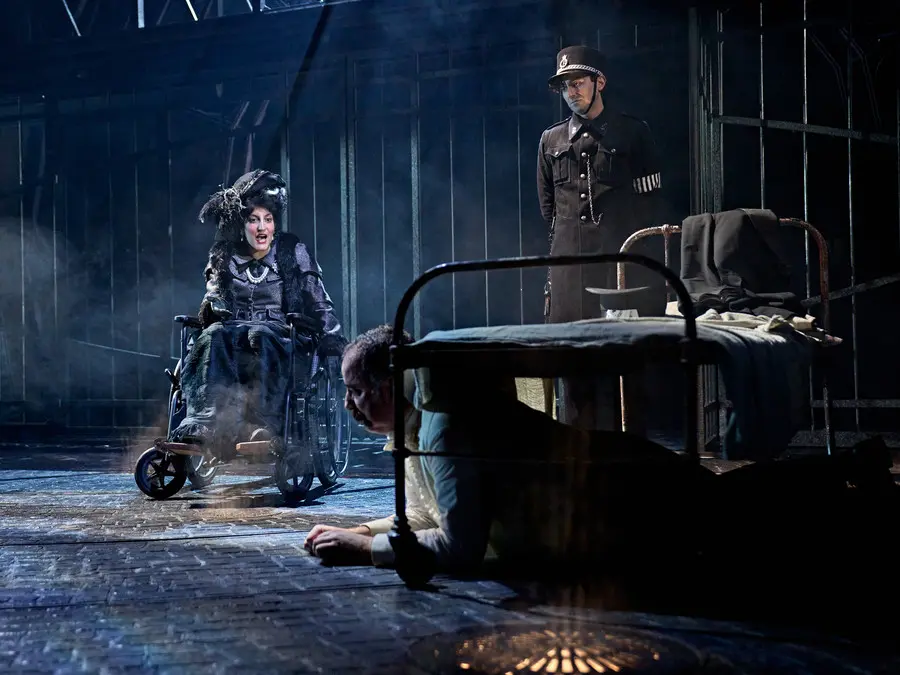
Renu Arora recounts how she secured the fundamental right to work and what it revealed about systemic barriers in the arts.
When a non-disabled artist builds a career that includes acclaimed work with the RSC and BBC Radio and receives repeated Arts Council England investment along with a Peggy Ramsay Foundation Award, society applauds them for their talent and ambition. But when an award-winning disabled artist like me does the same, the government steps in with a calculator and decides the work is ‘too expensive’ to support.
High-level visionary careers shouldn’t be a privilege reserved exclusively for non-disabled people. However, my recent experience with the Department for Work and Pensions (DWP) forced me to contemplate the end of my career – because the support that made that career accessible was suddenly removed.
You Can’t Make 20% of a Musical
Shortly after receiving Arts Council England investment to develop my new digitally immersive musical, The Burgundy Book, my Access to Work support was abruptly cut by 80% by the DWP. One arm of public investment had backed my artistic ambition – while the other ripped away the access I needed to realise it.
An 80% cut does not mean I work less. It means I cannot work at all. You can’t make 20% of a musical. And high-level careers can’t be sustained by entry-level provision.
It felt like an iron gate came down. I could see my 20-year career on the other side and I couldn’t get to it.
The magnitude of what the DWP’s decision held hostage – a vast slate of work including my stage work, memoir and album, my access support team and my entire identity as an artist – has been crushing. And it’s deeply, unfathomably unjust that I have been forced to carry it.
“The decision to remove support should never have been made. The time, effort and personal cost is huge to all involved, particularly Renu, and is a waste of resources that could otherwise have been used to make great art.”
(Monique Deletant, CEO of artsdepot)
Fighting for the Right to Exist as an Artist
For 10 tormented weeks, all that pressed on my shoulders. I stared down the barrel of the recurring thought: ‘Will I ever work again?’ facing a faceless government bureaucracy that threatened my entire body of work.
Instead of making the work, I had to campaign for the right to make it. And with every day that passed, I watched my career slip further out of reach.
My working days were swallowed by evidence, Access to Work portal-checking, media calls, interviews and press. Press. Press. Press.
My non-disabled peers and colleagues were worrying about reviews, press nights and rehearsal schedules. None of them were fighting for the fundamental right to exist as an artist. It is a profoundly lonely place to be.
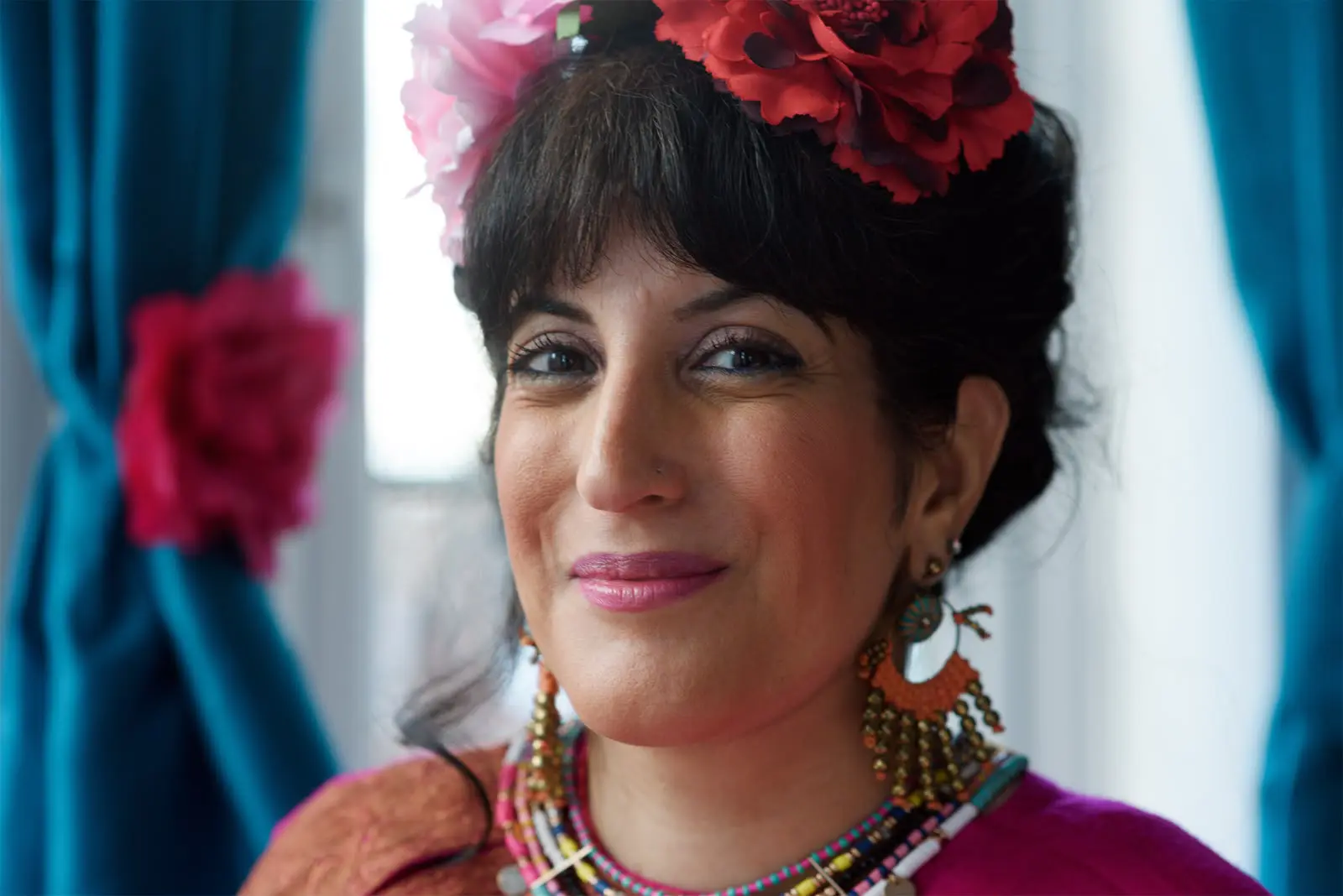
Renu Arora headshot. Image credit: Andy Martinez
What Happens to the Disabled Artist Who Can’t Summon Sky?
Throughout the campaign, I was supported by artsdepot, where I’m an Artist in Residence, with their PR and communications team helping to secure national media attention that became integral to the decision being overturned.
My member of Parliament Sarah Sackman, MP KC advocated on my behalf, escalating my case to Sir Stephen Timms MP – Minister of State for DWP. The campaign was reported across The Stage, The Express, Entertainment Focus and Big Issue. I spoke about the impact on BBC Radio and finally, a Sky News interview was filmed on the artsdepot stage. This is what it took for the decision to be overturned.
Why did it take 10 weeks, a huge national press campaign and the threat of a Sky News broadcast for the DWP to read and act on the evidence already stated in the assessment they had commissioned? Their own report explicitly stated I needed more support, not less. All of this press was required simply to get the DWP to read its own paperwork.
Among a cascade of absurdities during the reconsideration process, Access to Work offered neither a face-to-face Zoom call nor a three-way call, leaving no plausible way for us all to communicate. A system designed to remove barriers had dropped one directly onto my path to challenging it.
The scheme designed to provide disabled people with access to work would not provide me with the access I needed to communicate with Access to Work.
The process of reconsideration itself feels like it’s set up in a way that isolates, forcing people to give up their careers, silenced by a system that causes trauma, poverty and actively dis-ables people further.
A reconsideration decision is normally a letter in the post. No phone calls. No conversations. No contact. Mine, however, involved three calls in a single day, culminating in a call from the reconsideration officer’s home at 7pm on the eve of Sky News’ right of reply deadline.
Why Access to Justice Shouldn’t Require a News Crew
For those who do not have the industry standing that I have, or the vital backing of a venue like artsdepot and an organisation like Decode – an expert advisory service empowering disabled artists to navigate Access to Work – overturning a decision like this is almost impossible.
After fighting for the survival of the 20-year career I had built – and rebuilt after being hit by a bus and becoming disabled – I can finally return to my work. But my heart breaks for the thousands of artists still fighting to continue theirs. So I want to use what happened to me to shine a light on a system that leaves disabled people fighting for support that should be theirs by right, simply to do their jobs.
“The creative industry is being severely impacted by the loss of disabled artists’ voices and presence because people are no longer able to work due to these cuts.”
(Jenny Sealey MBE*, Artistic Director of Graeae)
*Faced the same ordeal and was also reinstated following a similar high-profile press campaign.
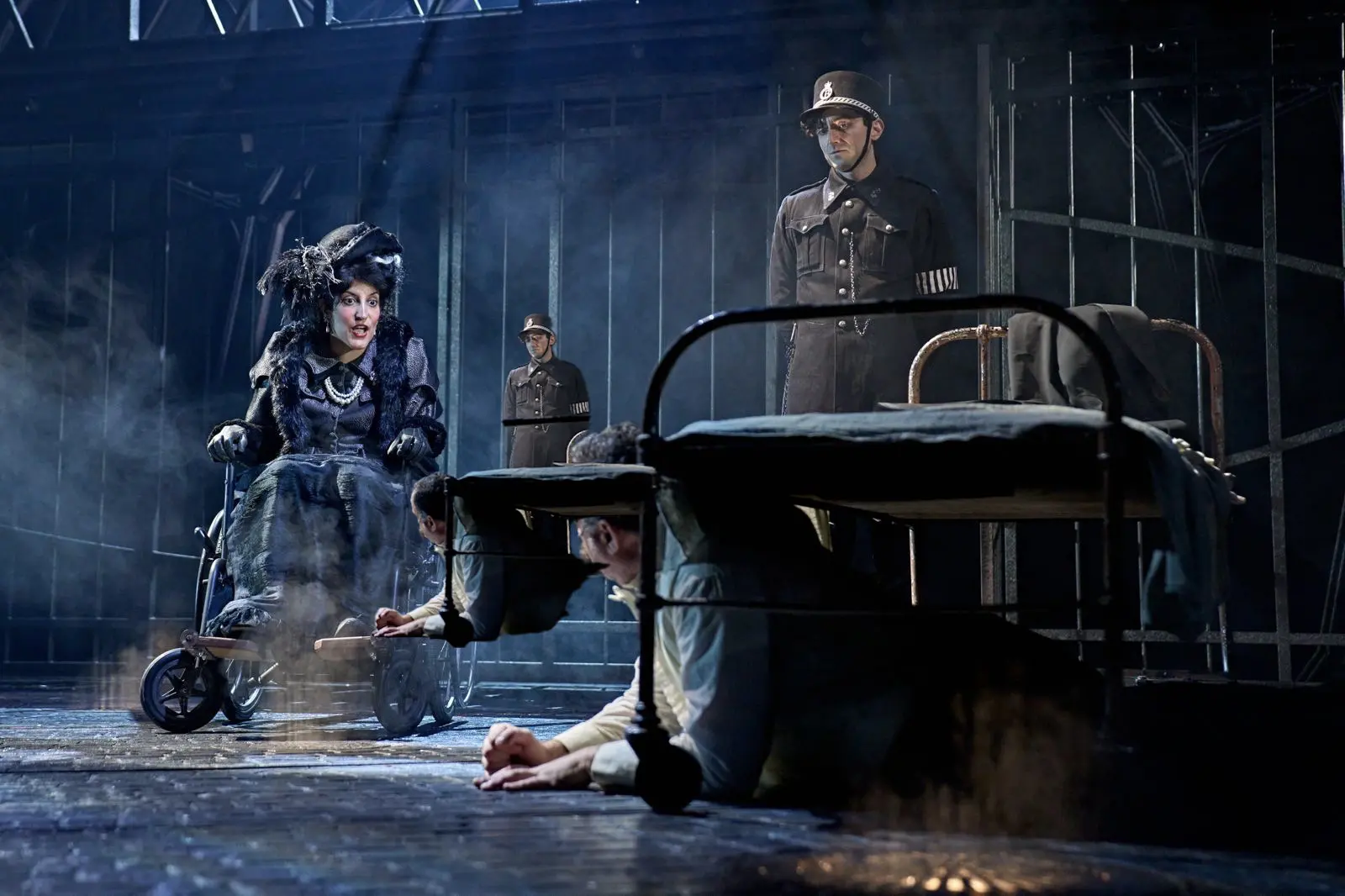
Renu Arora in ‘The Magician’s Elephant’. Image Credit: Manuel Harlan © RSC.
What It Costs Our Culture
The fight extends far beyond my story. Forcing disabled artists out of their careers makes our creative industries poorer, narrower and less vibrant. Disabled voices change the way we see the world. What kind of creative nation do we become if disabled artists are allowed work and ambition only up to the point at which their access becomes inconveniently expensive?
So, rather than the question, “How much does this person’s access cost?” what if we asked, “What does it cost our culture to exclude its artists?” Perhaps the answer is everything we lose with them. The work they never got to make. The stories unwritten, the songs unsung, the art we never saw.
Every time the system shuts out another disabled artist, Britain drops the gate on its own cultural legacy.
Next Steps
- I’ve been formally invited to speak to Sir Stephen Timms MP at Parliament with my member of Parliament, Sarah Sackman, MP KC to address this systemic failure.
- The development of The Burgundy Book begins, so the work can move again.
To the agents, casting directors and producers reading this – please stand in solidarity with your disabled artists. We really are stronger together.
About Renu Arora and ‘The Burgundy Book’
In March 2017, Renu Arora was hit by a bus and dragged under its wheel. At the moment of impact, she had a near-death experience. The Burgundy Book is inspired by this day.
The Burgundy Book explores how live, traditional musical theatre can sit alongside state-of-the-art immersive technology to recreate the ineffable visual world of a near-death experience.
Through virtual production, spatial and binaural sound, scanning technologies and digital environments, the work will place Renu in multiple realities simultaneously – including beneath the bus, hovering above it and entering the otherworldly NDE realm – while remaining physically present on stage.
Collaborators on The Burgundy Book include Erica Whyman OBE (RSC), Waterstones Book Prize winner Sita Brahmachari and Piers Leigh DOP (BBC/Netflix).
The Burgundy Book is supported by Arts Council England, the Peggy Ramsay Foundation, artsdepot and Unity Theatre Trust.
Find out more at www.renuarora.co.uk
If you’re looking for representation, check out our Talent Scout feature to let agents know that you’re seeking representation.