The National Theatre’s Director of Casting shares his essential advice for actors
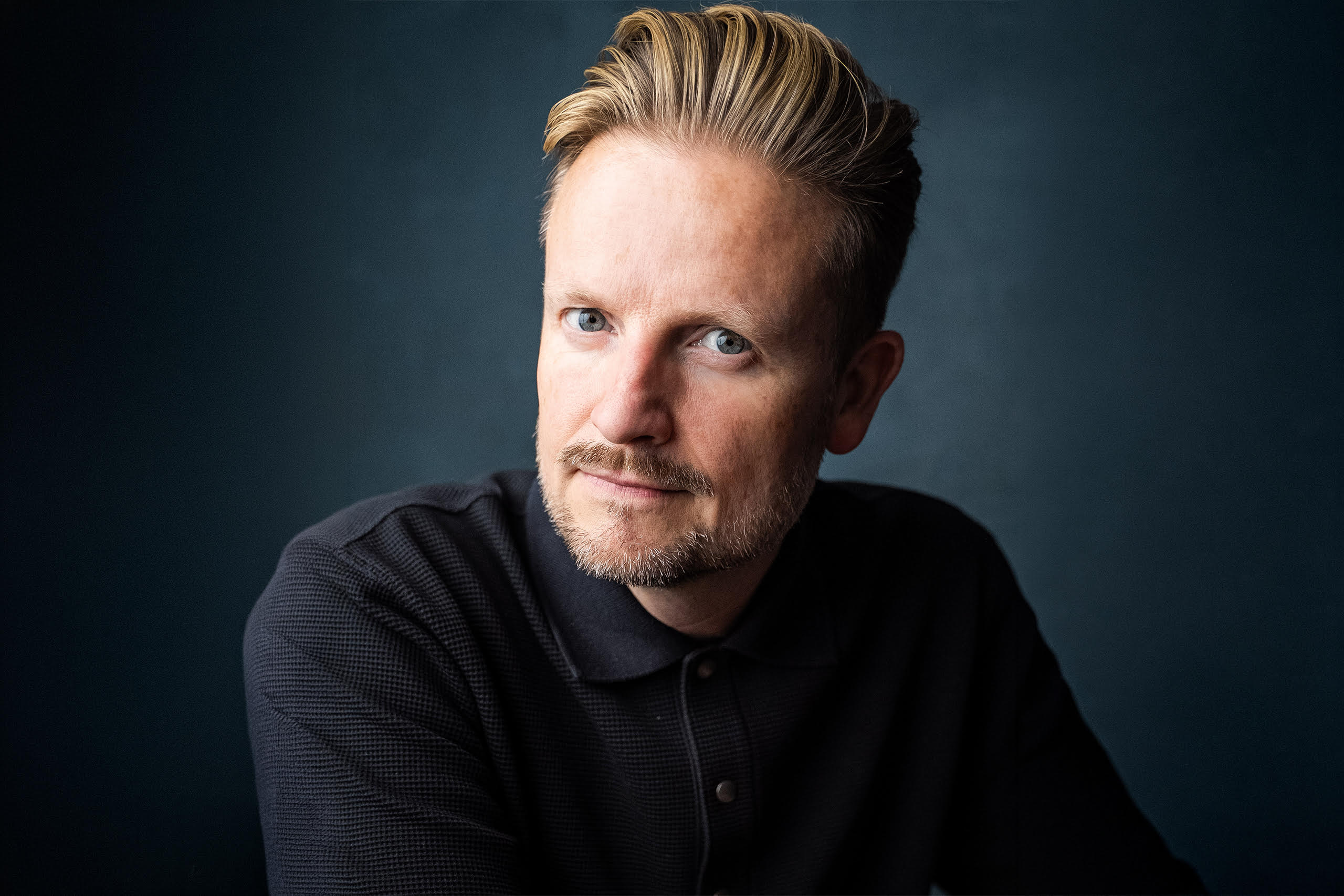
Long before he was steering the casting choices of one of the world’s most prestigious theatre institutions, Alastair Coomer was, by his own admission, a total cast-list geek. Between the ages of 13 and 18, while other teenagers were obsessed with football or cricket, Alastair was busy watching virtually every show the Royal Shakespeare Company presented. He spent his childhood poring over the Radio Times, utterly fascinated by tracking which actors popped up in a weekly episode of Coronation Street or Casualty.
It’s exactly this lifelong passion for actors – and a deep-seated respect for their craft – that has fuelled Alastair’s casting career. After climbing the ranks from assistant casting director at the National Theatre to Casting Director at the Donmar Warehouse, he returned to the National in 2018 to lead the casting department. Now, he sits down with us to give an insider’s look into how the industry’s biggest theatre institution actually operates.
What you’ll learn from reading this interview:
- Crucial Audition Technique: Discover why Alastair strongly advises against being fully off-book for theatre auditions, how to handle complex script changes, and how to successfully take redirection from a director in the room.
- The Reality of Self-Tapes vs In-Person: Gain an insider’s understanding of the National Theatre’s casting process, including why they still heavily champion face-to-face auditions and how they use Spotlight searches daily to find specific talent.
- Stage-Specific Demands: Learn what the casting team looks for regarding an actor’s physicality and vocal support when casting for the massive spaces of the Olivier and Lyttelton stages versus the 360-degree demands of the Dorfman.
- Industry Advocacy and Quickfire Tips: Read about Alastair’s push for casting recognition at the Olivier Awards, alongside practical advice on headshots, showreels, and managing audition nerves.
Hi Alastair. How did you get into casting?
I studied English at university but I did a lot of drama and directed a lot of work, so I went to LAMDA to do the director’s course. When I was there I started hearing about casting directors then I met a casting director at a party and she talked me through what it was. She asked if I’d thought about casting because of the way I talked about actors and my interest in them. From that moment, I thought, How can I get into casting?
Casting directors are much more talked about and featured these days but outside the industry I don’t think many people really know what casting is. Having a BAFTA for casting and the Oscar this year is amazing, as a lot of younger people don’t have any idea that it’s a potential career. It’s one of the reasons why we’re pushing for the Oliviers to finally include us, as it’s a strange sort of outlier.
Can you tell us about your career in casting so far?
Rather naively, I thought I’d just go and work at the National Theatre. I quite quickly realised it’s very competitive with very few jobs in that field. One of the routes in – and this remains the case today – was to work for an agent. So I went to work for Rossmore Management, which was then Sylvia Young’s adult agency. I loved it because it was a very different side of the business. It was a commercial setting with musicians, soap stars and lots of brilliant theatre actors, not necessarily the big stars, but actors who were in the company at the National Theatre and the RSC. I learned from a number of brilliant agents who worked there and also from Sylvia Young herself. I learnt how contracts worked and who all the other casting directors were.
I was sort of hunting around for jobs and then one came up as the casting assistant at the National. I applied for that and got it! The process was very competitive, so I always think of myself as being very lucky to have got that job.
I’ve done every job in the department since then. I was the casting associate, the head of department for a year while Wendy Spon was on sabbatical and then I went to the Donmar Warehouse for six years and was the casting director there with Josie Rourke, who was artistic director. When the head of department job came up at the National eight years ago, I went back.
Have you always been in-house or were you ever a freelance casting director?
Early on, when I was an assistant and an associate, I got a few casting jobs in regional theatre to try and stretch my muscles. It’s very difficult trying to move from assistant into associate or to full casting director because, really, the experience is doing the job. It’s casting projects, being in the room, auditioning with actors – that’s where you learn the craft. I was doing quite a bit of that at the National and pushing to get in the room as much as possible [because] if you’re not the casting director, you’re not the one running the creative conversations with a writer and a director.
During my time at the Donmar, I worked on a few films including Working Title’s Mary Queen of Scots, which was amazing. Looking back on it now I was a little out of my depth but I learned a huge amount and loved it. I started developing some other film projects but that coincided with going back to the National and it’s very hard to fit in those freelance jobs now.
Was there a production that changed your perspective on casting?
It’s very interesting having War Horse back in the building because I worked on the original production. It was truly groundbreaking, in terms of the skills that we needed actors to have and the amazing puppeteers. It was fascinating to be around and watch the process of how a show like that gets put together with the elaborate structure of all the different parts that people have to play, but also the skills they have to have. It was really eye-opening. I think it was the first really great, big family show in the National Theatre that was made in that way.
Since then, there are shows both at the National and elsewhere that followed that sort of pattern. There’s a direct line to My Neighbour Totoro and we’re making The Jungle Book now for this Christmas. It’s a big scale and a huge amount of work with complicated casting where we’re trying to find the very best people for the roles. There are so many factors. It’s a bit like doing a big musical where people have to fit certain skill sets as well as be fabulous ensemble players and great actors.
Also, I was around at the Donmar – although my colleagues cast it – for Julius Caesar, Phyllida Lloyd’s all-female Shakespeare. It was just an absolute game changer for me for thinking about how the classic can be presented, and about women in Shakespeare and who is allowed traditionally to play those parts. I learned a huge amount from being around that.

War Horse at the National Theatre. Image Credit: Brinkhoff-Moegenburg
Can you give us an idea of what casting looks like at the National Theatre?
At the moment, the team are working on finishing off The Jungle Book, which has been over a year of development work for a show that starts in a few months time. And then at the same time, we’ve got some slots next year where it’s not quite clear what’s going to go into them. There are a couple of titles and they might be quite casting dependent, so there’s some speculative work going on where we’re looking at lists for things that may never happen.
One of the wonderful things about a casting department at the National is that we’re at the centre of the programming conversation. And that’s about things like: leading actors, can we find actors who do a particular skill set? Is there enough time to put a large-scale musical together?
There’s a sort of brilliant balance where we’re project-led but also quite values-driven as well. We’re making sure that progress is made in terms of the actors on stage representing the City of London, and the nation at large, in terms of its diversity. If the stories that we’re telling require an accurate representation, we’re making sure that the quality of that is as good as possible.
We’re one of the largest employers of actors in British theatre. So many people want to work at the National and so many people deserve to work at the National Theatre – I’m really mindful of that – so we can’t advertise everything that we’re doing to everybody, as whenever we do, we’re overwhelmed. Equally, I don’t want to be secretive or highfalutin about what we do. If people ask what we’re casting, we do try and make sure that the doors are as open as possible.
What’s lovely is everything’s made on site and everybody rehearses in the building. You have so many actors on stage in the evening but also two or three companies rehearsing during the day so you’ll be in the canteen at lunch and see them all and that’s very unusual. For most screen casting directors these days they don’t even meet actors in auditions because they’re doing everything via self-tape. They might not meet the actors until the read-through and maybe then never again, but we get to see them all the time and that’s really lovely.
Do you do self-tape requests or are auditions all in person?
It’s mostly in person, I’m glad to say, but we do use them. It’s very useful. I’ve got a very difficult part to cast in something very specific, so I’ve done quite a detailed search for people who’d be up for it. The director is out of the country and they won’t be back in the UK until rehearsals start, so rather than asking 30 people to self-tape, I’ve gone through a shorter list with the director. We’ve talked to people in real detail and asked three or four to tape. In those circumstances, and because they’re quite senior actors – not senior in age, but senior in status – I’ve said if they’re comfortable doing that at home, that’s great but if they want to come in to the rehearsal room of the National, we’ll film them and then they can have a conversation with us about it.
If we’ve got younger roles to cast, it’s a great opportunity to send some material to a load of brilliant new grads, for example, and then we as a department can see quite a lot of people and look at particular material. We use that to hone the list down.
More people get seen for parts in the theatre via self-tapes but if you’re putting an ensemble of actors together, I don’t understand how you can do that without meeting them in person. In theatre, most people would start with self-tapes and then go to in-person auditions, although I hear that that isn’t always happening.
[Self-tapes aren’t] a day-to-day thing, but it’s brilliant if someone’s out of the country or in Manchester or Glasgow and they’d rather do a self-tape or meet on Zoom for a first round. That’s a really good option and it saves people a lot of money and hassle. It’s also a great thing if people have access requirements that mean getting to the South Bank is complicated. I’ve known a couple of actors who actually requested it because they find it less terrifying.
One of the side effects of so many self-tapes is [that when] I met a young actor the other day, they we’re 18 months out of drama school and we were their first in-person audition. I thought that was crazy!
Their first in-person audition is at the National Theatre – these are two quite overwhelming things to be juggling as an actor. I really have sympathy for it, but then it’s generational, isn’t it? There’s a generation who, if that’s all they’ve known and they’re comfortable, relaxed and knowledgeable of technology, can use that to their advantage.
I don’t want to sound like an old stick in the mud but I just think that you’re just going to be able to get more out of an actor in the room. Also, how are directors practising directing the actors in an audition scenario? How are young casting associates and casting assistants learning how to operate a session? We do have to have quite frank conversations about the effects [self-tapes] are going to have not just on actors, which is primarily the problem, but also on all other parts of the industry.
Do you use Spotlight as part of your process?
Every day. We use it for research. Doing searches for people is probably the number one thing. If an agent suggests an actor for a role via an email or if an actor writes to us, I’ll always refer straight to Spotlight before anywhere else. And then there’s searching for very particular protected characteristics and looking to represent a particular community’s ethnicity or region or accent. We can search for that, so it’s very handy.
We have short lists in there – we make lists all the time. I search a lot through credits as well. So, I might be working with a director and looking to cast the ensemble of a show; I’ll be like, I wonder who’s worked with that director? And if it’s a director I haven’t worked with before, I might have a little look and see which actors they’ve worked with so I can start to imagine what their taste is.
You could be working on, I don’t know, Oscar Wilde and think, “I wonder who played ‘Algernon’ before?” That’s a good way of getting an idea of the type of actor that plays this role and do we want to follow in that tradition or do we want to play around with that a little bit? It’s phenomenally useful for that.
We use it for breakdowns as well but on the whole, it’s for younger roles for the ensemble and understudied tracks and for the more unusual parts. We probably start with our own lists for most roles at the start of a process.
Does what you look for in an actor differ depending on which stage at the National the production is going to be on?
To a degree. I think there’s a question about experience, as the bigger stages are more demanding and not just vocally. I think the conversation often comes down to questions around voice, and that’s absolutely incredibly important, but for me, the qualities I’m looking for are as much about articulation as they are about projection.
I’m interested in how actors are in their bodies and this is why I don’t understand why, if you’re casting a play, you’re not meeting people in person, because you want to see someone completely inside their body, completely in control of their instrument, both their voice and their physicality. Will they sit inside the physical language of the play? That’s the obvious thing when you’re doing a musical because you’re going to be working with a choreographer.
We’ve got Les Liaisons Dangereuses on stage at the moment, and it’s quite a radical way of presenting what initially was a sort of chamber play with eight or nine characters. This has got a cast of 22. It’s full of professional dancers and everybody had to be able to dance to a certain quality. Monica Barbaro is a trained ballet dancer. Aiden Turner was a Latin and ballroom dancer as a teenager. Lesley Manville was a dancer as well as an actress when she was younger. It’s finding actors who are great actors but with amazing physical language and life. They are all dancing and moving and living within this physical language of the play and it’s a hard play. The language is difficult, there’s a lot of demands there.
That, to me, is the thing I’m most interested in. Can you give a bold and confident outline physically on stage in the Olivier or the Lyttelton, which are big wide open unforgiving spaces, and then be able to fill in the detail and give beautifully detailed and realised performances within that outline?
The Dorfman is slightly different, partly because it can be in such a different configuration in the round. If you’re doing something in the round, that requires another skill set that not all actors are aware of, which is about, crudely, acting with your back. To have brilliant stage craft, being able to share the language of the play, but also the emotion of the story in 360 degrees. I’d probably be less concerned about an actor who had a bit less experience on stage in The Dorfman because it’s a little bit more forgiving, but it’s still not a tiny black box theatre. It’s really quite a big space.
How do you balance the search for established names with the theatre’s mission to discover new voices?
I don’t think I’ve ever been in a conversation on the South Bank where someone said, “We’ll need a name for this show to happen.” The shows are programmed because of the quality of the writing and the directing and are project-driven by those artists. We are in conversation with a lot of leading actors about what they want to do.
It might be that a thing is programmed because a leading actor has been talking to a director about a play, or we’ve made that introduction, or an actor comes to us and says, “I really want to do some Shakespeare.” So, we think about what that might be and who that director would be.
We’ve been looking at some stats recently and I think it’s something like 50% of British actors that have won a BAFTA, Olivier, or an Oscar have been at the National at some point. I think it speaks to this unusual thing that a British actor can work on screen and on stage in the same calendar year at quite a significant level. You can be in a Netflix drama and then be at the Almeida or the National or the RSC in the same year and there’s no barrier between the two mediums. Great British actors do work in both and I think that’s really fascinating.
I roll my eyes about celebrity casting because at the National Theatre most of the actors that have a significant profile probably started their careers in or around the National Theatre or other theatres like it. They’ve become very well-known through a famous television programme or film but behind that is a really significant stage career. I think that that’s a failure of our press to talk about actors in terms of their stage credits and the huge amount of work they’ve done.
We occasionally get accused of having the same people at the National Theatre and we worked out on the whole that two-thirds of the company in any year have never worked at the National before.
Congratulations on winning the inaugural London Theatre Casting Award for ‘The Importance of Being Ernest’ at this year’s Artios Awards!
I was delighted. I’m very proud of the show. It’s a great example of where I was very involved in the programming of that show because there was a conversation about if you did The Importance of Being Ernest at the National Theatre, how would you cast it. You could present it in a conventional way or you could present it in a way that was diverse in terms of casting. And the answer was to have ‘Lady Bracknell’ from the West Indies in an absolutely extraordinary performance by Sharon [D. Clarke].
It’s a production that lent into the queerness of the script and I think that’s reflected in the casting. I hope that the playful spirit of our casting would have got the approval of Oscar Wilde himself; I suspect it might have done. I think he’d have had a good time.
You mentioned earlier about the Olivier Awards not having a casting category. What would you like to see happen?
I think it’s an omission given that there’s a BAFTA in television and film casting, there’s an Oscar and many other awards as well. My understanding is that the Oliviers understand that too but it’s complicated fitting in new awards and there are lots of different departments and lots of different technical awards that should also be recognised but I do think that what we do [in casting] is a craft and I think that it’s an integral part of the production process.
I also think it’s a feminist issue because casting is one of those areas where women who couldn’t necessarily – particularly in the 70s and 80s – be directors or producers could really excel in casting. It’s one of the reasons why so many casting directors are women and I think that often it’s the parts of our industry that are dominated by women that are not recognised – wigs, hair and make-up would be classic examples as well. I think there is a correction that needs to happen there.
How does it feel when you see actors win awards for their work in productions you’ve cast? I’m thinking of Rosamund Pike winning at the Oliviers after you cast her in ‘Inter Alia’.
I’m over the moon; she deserves it. All the people nominated this year in the actress category were amazing but [Rosamund’s was] an incredible technical, emotional and political performance. She was extraordinary in the National. She’s even better in the West End and she’ll be even better again on Broadway.
It’s like she’s running a half marathon every performance. It’s exhausting physically but also to carry that story and the emotion, I mean, she’s just wonderful. It’s brilliant when people win things.
When you’re casting a new project like ‘The Authenticator’, for example, how much influence would an actor have in shaping their character during the casting process?
Quite a lot. If you’re the first actor to play a part, some of your DNA lingers in the play forever. Working on new work is great because of that reason and one of the things about the National is that so much of our work is developed at the National Theatre Studio. I think all of the actors in The Authenticator were involved at different stages with one of the many workshops that led up to that, so the casting process on that show was not one of lists and auditions; it was about people being in workshops and developing the play. Certainly at least two of the actors were involved in most of the workshops for that.
If you’re doing the workshop process as an actor it’s very hard because what you want to do in a week-long workshop is to serve the writer and to not be thinking, ‘I wonder if there’s a part in this for me down the line?’ Actors are so generous in workshops because they don’t know what the life of the play will be once the workshop finishes.

Rakie Ayola (‘Abi’) and Cherrelle Skeete (‘Marva’) in ‘The Authenticator’ at the National Theatre. Image credit: Marc Brenner
And when you’re approaching a classic like Moliere, how do you approach casting to make the piece feel contemporary?
The adaptation is very contemporary. It’s a very loose version of the play and it’s been reworked quite a lot but it’s still in blank verse, so it requires a real muscle and a capacity with language. At the same time, it’s satirising contemporary stereotypes, so you’ve got to be able to send that up and understand what that is. It’s a real balance.
There are two or three younger parts and it was really interesting seeing who could really do it [in auditions]. Can you be contemporary but also almost Shakespearean, which technically is about things like can you get to the end of the line and still make sense of the idea. Often they’re long sentences and it’s in verse, so you have to have a good sense of rhythm but also be able to be recognisably a social media influencer or a crisis management professional, an author, a movie star – they’re all in there. It’s like rubbing your tummy and patting your head at the same time. It’s hard.
How has your eye for talent spotting evolved over your career?
It’s just experience really. I don’t know if it changes so much but you just get an instinct for it. The thing I’ve got better at is the ability to understand what technically is happening with an actor.
There’s nothing more exciting than seeing someone in their early 20s who’s able to really deliver language. We’ve talked a bit about Molière and Oscar Wilde. Language comedy is so hard and British actors have traditionally been the best in the world at it. I think the reason why British actors are so popular on screen, usually as the baddies, is because of our sense of humour; our theatre tradition is verbal and lyrical. It’s language-based. We’re traditionally a writer’s theatre, not a director theatre. British theatre is the tradition of the Royal Court actually and of new writing. British and Irish actors have this amazing wit and sense of humour. That’s the stuff I’m interested in and I think I’ve got better at understanding that.
Do you have any advice for theatre auditions to share with actors?
The rule of thumb for nearly all theatre is not to be off book. In fact, the opposite. Be really familiar with it – really know the scene and the character, but that’s not knowing the words. If you’ve remembered some text that you’ve only seen a few days before, I promise in the audition, most of your energy will be going on recall and I can see it in your face. The eyes go up and out to the side as people try to remember what the next line is and not what they’re actually thinking on the line.
Be very familiar with it, not by looking at the play text in front of you, but being able to refer to it and get it right. Often the writer is in the room with you, particularly if it’s a new play, and the writer can get very angry or upset if they don’t hear their language delivered back to them accurately. Don’t paraphrase it. Often when you’ve learned something, the tendency to paraphrase or to fudge it to get things mixed up is really easy. So it’s being able to sort of be away from the text but as accurate as possible.
Also the third thing is that a director will give you a note, which is nearly always designed to read the line in a different way, to give you a different intention or a different atmosphere, to give a different tone. And that’s very hard to do if you’ve just remembered it because you’ll have remembered it in one very particular way. If you haven’t quite remembered it, it’s easier to listen to the note from the director and to really operate the note. It’s quite a skill.
Here’s the other thing: I’ve sent a scene out today for some actors to look at and it’s six pages – it’s a lot. So even to learn that in a week would be very difficult. For some actors, learning it is a really important thing to do, if you’re dyslexic [for example]. Their process is learning it and I respect that.
But you’ve got to be open to being able to flex in the audition room because that’s what an audition really is; a director finding out, “How can I direct that actor? Is the note that I’m about to give them a language they understand? Will they respond in a way that makes me interested in working with them in the room?”
Directors are looking for two things at the same time: One is, “Can this person plausibly be this character? Do they fulfil the idea I have of this character?” And secondly, “Can I work with them for four, five, six weeks in a rehearsal?”

Freddie MacBruce (‘Allen’) and Sandra Oh (‘Alice’) in rehearsal for ‘The Misanthrope’ at the National Theatre. Image credit: Marc Brenner
Do you have any examples of performers who maybe didn’t nail their audition but you gave them a shot because you felt they were the right person for the role?
I’m not going to say specific names, but there are lots of examples. I think this is why casting directors are important, because I know certain actors are just terrible at auditioning but they’re amazing performers. It’s our job to say [to a director] I saw them do that at the Royal Court or, I’ve seen them do that; they’re capable of doing it or I’ve worked with them before. Equally, I can put my foot down with the director and say, “I think you got it wrong. You didn’t give them the right note in the room. If you’d asked them to do it like this, I think we’d have seen it. So, let’s get them back.” I’ll give the [actor] that specific note; they come back and they’ve just got it.
It’s really hard for actors because the director and the casting director have been sitting in the room all day doing auditions and it’s become clear during the day what we need them to do, where the bar is set for them to pass. Maybe it’s a joke that no one’s getting or a story beat that no one’s understood yet, or a part of the character we haven’t seen yet. You sort of want to sit them down and go, “This is exactly what we’re looking for” but actors have got to try and find it for themselves really. But it’s wonderful when you get someone back in because you have a hunch that with a great note they’re going to do it. And then they do.
Quickfire Questions
- What are you looking for in a performer headshot? That it’s clear who they are and if it’s as up to date as possible.
- How much of a showreel do you watch? A few minutes tends to be all I need to see.
- What audition room advice would you give to actors? We’re on your side and we’re there to help. Genuinely, we invite people to come and audition for us who we want to see succeed.
- Tips to deal with nerves: If the nerves become a bit overwhelming, take a moment and breathe. Try and make the space your own.
Thanks for taking the time to talk to us, Alastair.
As Alastair notes, Spotlight is where he turns to research credits and to build shortlists. Crucially for actors, the National Theatre team relies on Spotlight’s specific filters to search for unique skills, regional accents, and diverse backgrounds to ensure their stages reflect the nation.
To make sure your profile is working as hard as possible for these searches, remember Alastair’s key takeaways: Keep your headshot up-to-date, ensure your showreel gets straight to the point within the first couple of minutes and make sure your skills are accurately listed so casting directors can find you.
Sign in to your Spotlight account to review your profile and put Alastair’s advice into practice.