
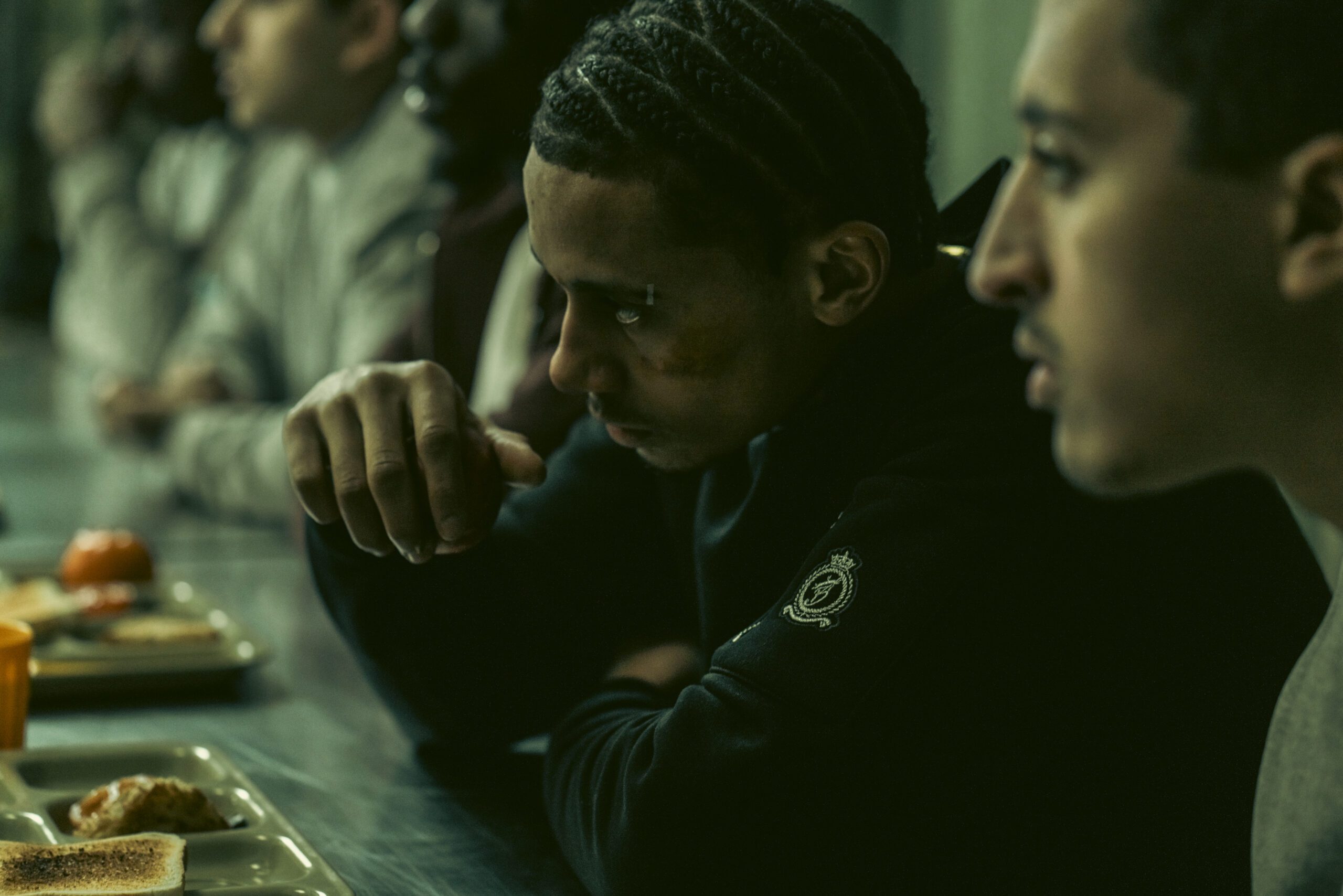
Sekou Diaby discusses breakthrough roles in ‘Boarders’ and Ashley Walters’ ‘Animol’.
Sekou Diaby is fast establishing himself as one of the UK’s most compelling multi-hyphenate talents. Originally coming up through breakdancing and battle dance before training at the Brit School and co-creating narrative movement shows, Sekou’s leap into screen acting happened as organically as it did rapidly.
Following his breakthrough television debut as ‘Toby’ in BBC’s acclaimed comedy-drama Boarders – a role that earned him widespread recognition and an agent – Sekou was recently named one of Screen International’s prestigious Stars of Tomorrow (sponsored by Spotlight).
His momentum shows no signs of slowing down as he currently stars as ‘Dion’ in Animol, Ashley Walters’ directorial debut. The film, a tense yet empathetic character study of inmates at a juvenile detention centre, recently took home the FIPRESCI Prize for Best Film in the Perspectives section of the Berlin International Film Festival and went on to receive a strong reception at the BFI London Film Festival.
We met with Sekou to chat about the film, his process for crafting complex screen characters, and what he learned working alongside established actors like Steven Graham.
Hi Sekou. I want to start by congratulating you on being named one of this year’s Stars of Tomorrow. How does it feel to be recognised at this stage of your career?
Thank you. It felt really good. It’s nice to be acknowledged by someone like Charles [Gant, curator of the 2026 Stars of Tomorrow selection], as he’s like a library for film. He knows everything and he’s so well-articulated and well-versed in it. It felt really good to be acknowledged by someone like him and an establishment like Screen International cos they know what they’re talking about.
How did you get into acting?
I’ve always been a performer, but in my head I was never an actor; I was a dancer. I started as a battle dancer and then I ended up studying at the Brit School where we learned loads of other styles. Fast forward, I’d been out of college for two or three years when me and a friend, Harvey Burke-Hamilton, were creating narrative dance shows and trying to express something through movement alone.
One night I thought of a film idea and I really wanted to do it. I felt like it was an important story to tell. So from that day on, I shifted my whole focus and started doing that instead of dance shows.
Someone saw me in a show called Redback that I wrote, directed and was also in and said, “You should try acting.” I signed up for an acting course with the mindset that if I knew how to act better, I’d be able to direct better when I’m working with actors and I just fell in love with it. I was tapping into things that I didn’t know existed within me. I learned to love the process of approaching the work and also the play of it. The next thing I knew, I booked Boarders.
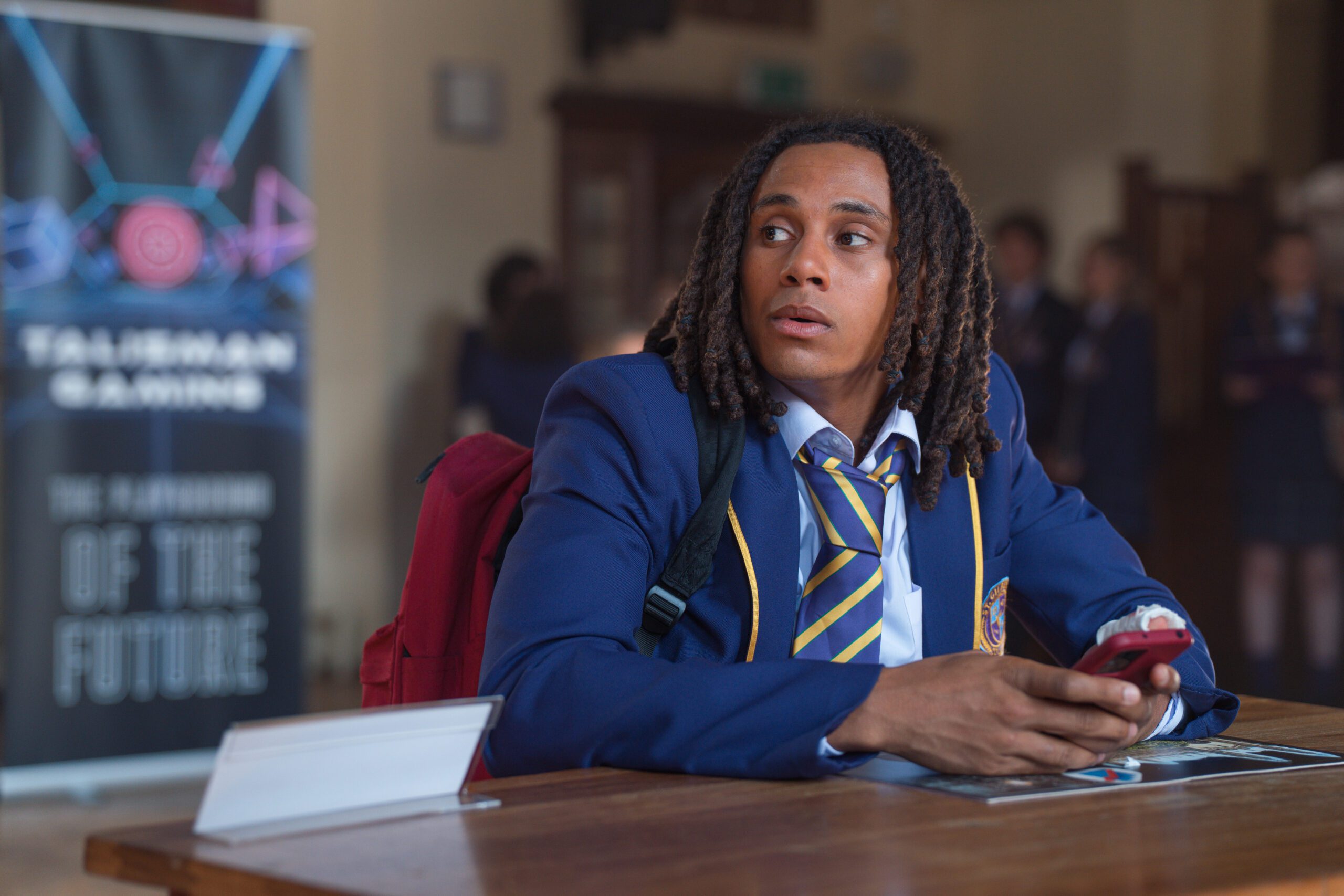
Sekou Diaby as ‘Toby’ in ‘Boarders’. Image Credit: BBC/Studio Lambert/James Pardon
What did you learn on the ‘Boarders’ set that you’ve taken forward with you into other acting work?
I’d never been on a professional set, so there’s so much! I didn’t know that a 10-1 was a code word for going to the toilet. I knew nothing. There are loads of things like professional terminology and etiquette that you’ll learn when you get on the job, but there are so many other things that are just assumed that you know. Things like how to do this with your agent, or you can ask for that, or if you have a problem, this is how you should go about it.
Boarders re-instilled in me what I already knew – just play. So many of the best moments were improvised and that doesn’t come from trying to get things right; that comes from getting things wrong. There’s probably loads of unusable takes, but that freedom and that play are probably what made such magical moments.
I walked away from Boarders feeling like I need to keep playing and I’m trying to do that. Sometimes it’s hard to stay playful and stay loose, but the only solution for feeling tight and feeling like you can’t play is by doing more work at the beginning. If you put in the work at the beginning, you’ve learned your lines, you understand your character, you understand the story, then you should be able to play.
You can next be seen in ‘Animol’. How would you describe your character ‘Dion’?
‘Dion’ is an antagonist. He’s someone who welcomes ‘Troy’ [played by Tut Nyuot] into the world of youth prison. He has a strange and nuanced relationship with the lead characters and is changed or made to reflect [on himself] because of what the lead character goes through.
What’s your process for approaching a script?
When I first get a script, I try to read it without knowing who I’m reading for. I’ll close my eyes when I’m looking through the email and just get to the script and try to read it without knowing that I’m reading for ‘Dion’. I try to get a full understanding of the story without a bias of who I might be playing.
Then I’ll go and look at the character I’m playing and insert myself in there. The main question I’m asking the second time I read it is: why are we making this film? What’s the message? What’s the soul of the film? With Animol, it has such big themes and big topics, but really the soul of the film for me is about authenticity.
I’ll go back through [the script] again and say what’s my service to that soul and where does ‘Dion’ come in that? I think ‘Dion’s’ main role is to be as big of a barrier to the main characters being their authentic self as possible. So then I think, how do I do that? That’s when I get into my research. I speak to people with lived experiences. I watch and take ideas from documentaries and old films.
I work with a coach, Victor Villar Hauser. I really respect him; he’s an amazing coach and an amazing help to me in my career. One thing I would say is that when I first got the script, my coach and I were actually quite worried that it was just going to be another prison drama that dehumanises criminals and working-class people. We agreed that it was really important that we try to change that narrative and so whilst I was looking at how to design ‘Dion’, I was trying to find ways and moments where his humanity could seep through. Hopefully I did that.
How did you build ‘Dion’s’ backstory to justify his motivations on camera?
That’s one of the most fun parts of the work, to be honest, the justifications of things. You can have a character that says some wild things or does some wild things and you think to yourself, why would someone ever do that? And that’s the puzzle to solve.
I think ‘Dion’s’ main, in fact, most people’s main motivator for everything in life is fear. So, I asked myself, what is ‘Dion’s’ fear? What is he scared of? ‘Dion’s’ main fear, for me, was being alone and being without love. That was his main motivator: to secure love for himself and ‘Dion’s’ way of getting love happens to be quite manipulative and tactical. He’ll give and then take. He’ll put you in a rainstorm and then offer you an umbrella.
I think we see that a lot in society, you know? We talk about toxic masculinity and we see toxic relationships of, ‘I’ll put you in a terrible position, but don’t worry, I’ll be your saviour.’ It’s real psychological warfare going on and I think ‘Dion’ does that to the max with people and is very good at it.
Was there a scene that you found particularly challenging to shoot?
It only ever feels challenging if you haven’t done the work, so you don’t understand the point of view of the character – I have been in that position before multiple times. That’s when it feels challenging because there’s a gap in your understanding of the character or the circumstances.
What can be challenging with a character like ‘Dion’ is not letting go of the ball, not turning the fire off the pan, so that when “Action” comes, you’re kind of like, “Oh, I need to find this character again.” I think Ashley [Walters] actually nurtured a great environment to be able to do that on set.
What was the process like working with Ashley Walters as a director?
We shot the film in 22 days, which meant that we were very short on time. There wasn’t loads of time to sit down and reflect and give direction – and Ashley has spoken about this publicly – because he knew he was on such a tight schedule; he needed actors he could trust to get the job done. [We] sat down at the beginning to understand the tone, what we were trying to do and the soul of the project and after that he just let us loose with it.
When he would give direction, it was very specific. He would only ever give direction if it was very needed, and I think that’s because of his lived experience and his connection to the themes within the film.
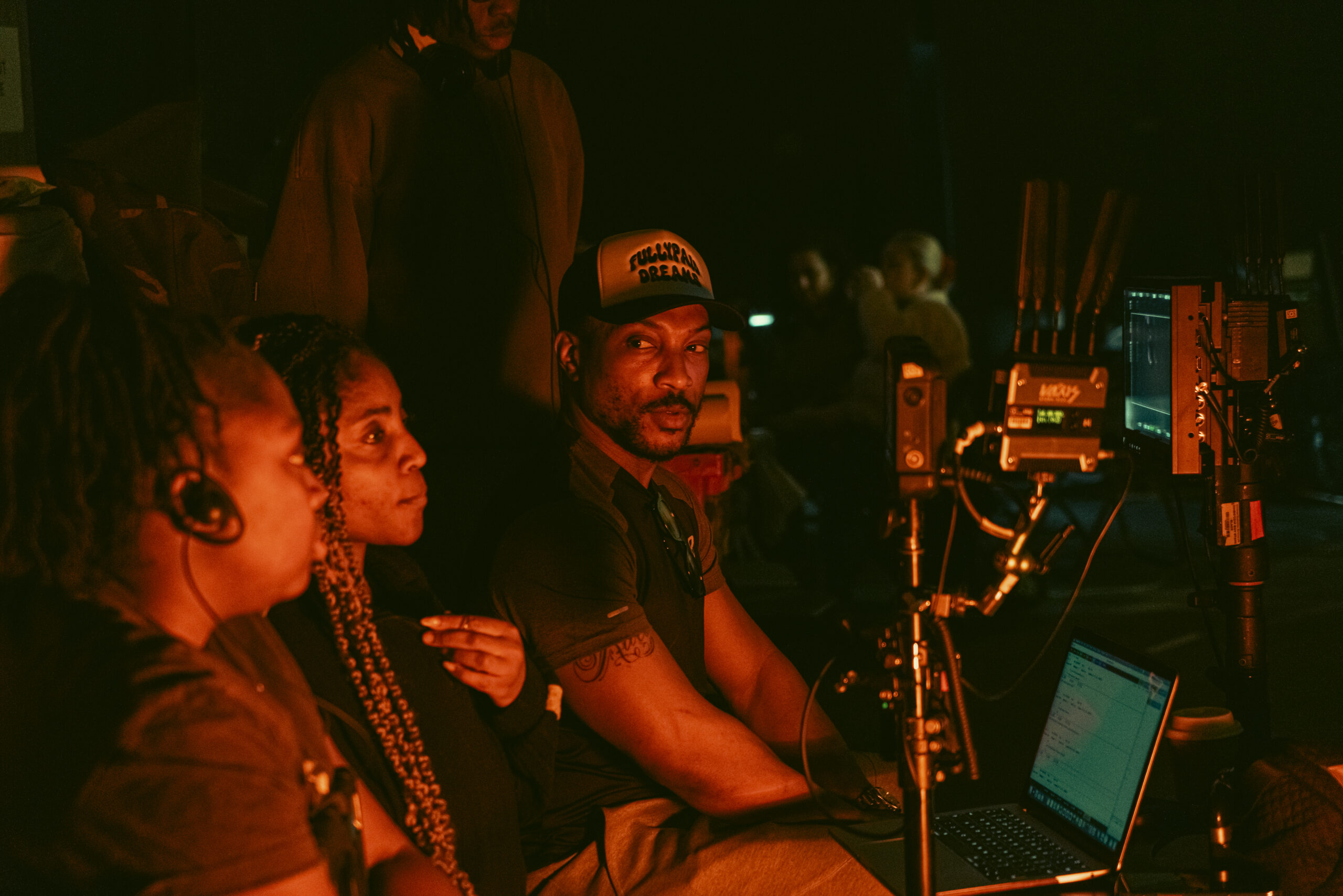
Behind the scenes on ‘Animol’. Image Credit: © Sky UK
Did you pick up anything from working with co-star Steven Graham?
Watching Steven was a masterclass. Not even in acting, but more on the professionalism side of acting and how you carry yourself on set. Steven has a really good way of controlling the room, not in a controlling or egotistical way, just in a very collaborative leadership type way.
It was the first time I had worked with an actor of that calibre who is so efficient in communicating ideas like “Would you want me to stand here?” or “I think we should do it like this”. I want to work with more actors that have been in the game and have that wisdom so I can understand my version of that.
Everyone’s going to be different, but it seems like the way that great actors do it is just by being nice to everyone and treating everyone the same. That then affords you the luxury of being able to be open and honest and respected because you know you’re being cool.
What do you hope audiences will take away from seeing the film?
The true measure of whether you’ve done something good or not is what the ordinary Joe says about it. I hope audiences feel inspired to find something, someone, somewhere where they can be themselves and they can drop the mask.
What is something you wish you knew about the industry when you were starting out?
It can be quite an isolating thing being an actor and I would say just ask for help. Whether it’s your agent or your producer. Your producer can help you. Understand everyone’s figuring it out together and most people will want to help, so ask for it.
This might not be the same for everyone, but what really worked for me is that when you get in the industry, there are so many opinions that are all different from each other; I listen to every opinion. Whether you agree with it or not, it’s always good to listen.
I believe that you kind of know it all already… You know that if you get an audition in an American accent and you’re stressed about it, it’s probably because you know you need to work on your American accent. You don’t need an acting coach or your colleagues to tell you what you need to do cos you know what you need to do.
Follow your instinct. In the work, but also, we should follow our instincts as to how we need to carve our career: which agent to pick, which publicist to pick. Just follow your instinct because no one knows what they’re doing. I have mentors who are award-winning actors that I speak to and they don’t know what they’re doing. Everyone’s winging it. Listen to your heart; personally, my heart’s never let me down.
Thank you so much for your time, Sekou.
For actors navigating the industry, Sekou’s career so far offers a compelling reminder: put in the prep, trust your instincts and never stop making room to play.
‘Animol’ is in cinemas on Friday 30 October 2026. Boarders is available to watch on BBC iPlayer.
Don’t miss your next opportunity. Sign in to your Spotlight account or join Spotlight today to get discovered by the creative teams bringing stage and screen’s greatest stories to life.