Stage performer Rob Madge talks about their acting journey, creating their own show, social media and starring in panto.
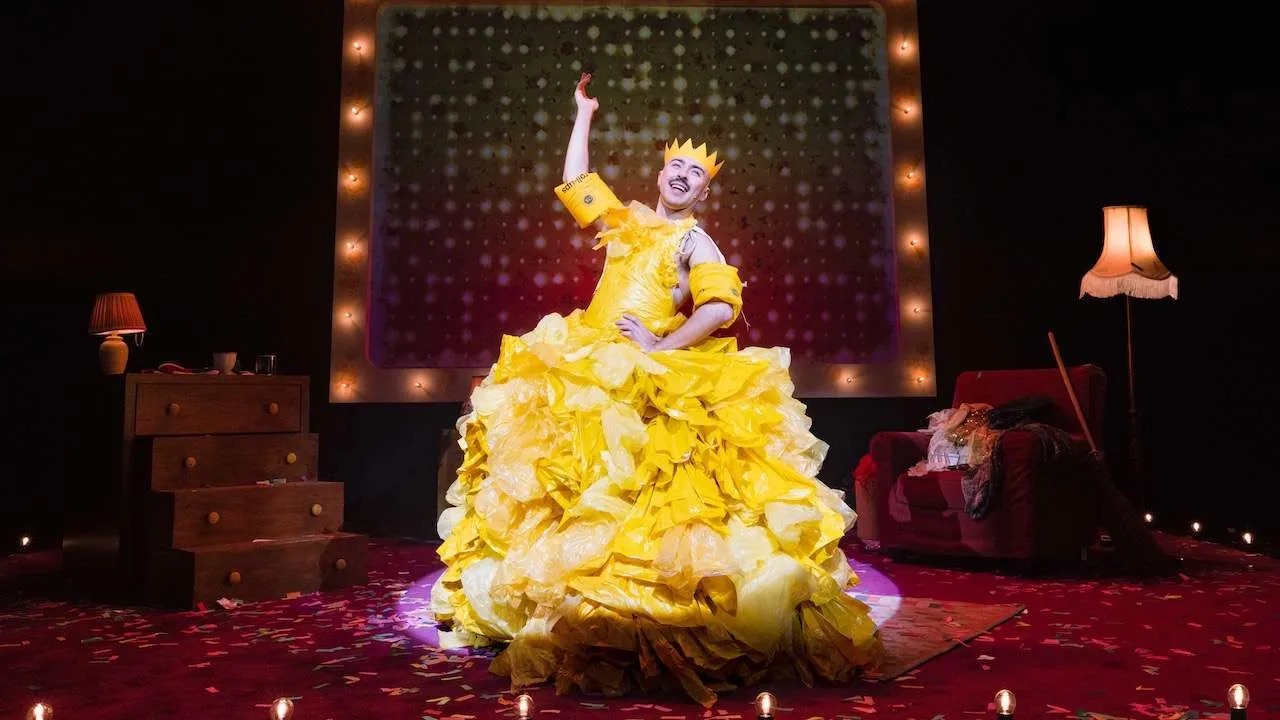
For any performer bringing a show to the Edinburgh Fringe, success is the dream. But even in their wildest dreams, many couldn’t imagine having that show go straight from the Fringe to the West End. However, that’s precisely what happened to performer Rob Madge. What they’ve achieved with their autobiographical, one-person show, My Son’s a Queer (But What Can You Do?), speaks volumes of their talent, as does their recurring appearance in the Palladium’s pantomimes each year.
We spoke to Rob about their journey to the West End, their creative process, promoting themselves on social media and how it all started in the family living room. Here’s what they shared:
In this interview, you’ll:
-
Discover how creating your own work can help you find your voice and overcome a lack of representation in the industry.
-
Gain insight into managing the transition of taking a production from the Edinburgh Fringe to the West End.
-
Learn practical tips for overcoming writer’s block and why collaboration is crucial even when making a ‘solo’ show.
-
Understand how to utilise social media unapologetically to showcase your unique talents and open up new career opportunities.
Hi Rob. How did you first become a performer?
Like anybody who ended up in this industry, I would torment my family with living room performances. All my mates at school were big into rounders and P.E. I was into re-enacting Rodgers and Hammerstein in the classroom at lunch break. From then on, I developed a real love for it and got my first proper job. When I say proper job, it doesn’t feel like a job when you’re nine, but it was ‘Michael Banks’ in Mary Poppins. From there, I was very lucky to get into the Sylvia Young Theatre School and they honed my craft there for me. From then on, I’ve done nothing else, really. I couldn’t do anything else. I’m useless at everything except belting a number.
Can you tell us more about being a child performer?
My first professional gig was in 2005, so I’ve been performing since I was nine years old. Then, I took some time out before going to Warwick Uni and did an English degree, which basically means you still want to do theatre, doesn’t it? That creativity never left me, and then I ended up going back to theatre after that so it was a waste of three years, really, but I had a nice time.
What inspired you to make your own one-person show?
I think, fundamentally, I wasn’t seeing my identity reflected in a lot of the work that I was going for. I just wasn’t seeing roles that I felt I could step into.
Everyone asks you, “What’s your dream role? What would you like to do?” And I was getting to a point where I didn’t actually know the answer because I wasn’t seeing anything that really spoke to me so I just wrote it myself, at first, as a passion project to pay tribute to my brilliant family. I wrote it during Covid, so I didn’t even know if theatres would ever open again or if it would ever be on in any capacity. I wasn’t seeing myself represented, so I made it happen myself.
I Initially wrote it as a sort of stand-up comedy set, not as what it is today. The show is what it is now because we have the brilliant Luke Sheppard as our director and he and the team really turned something that I thought was just a fun piece of theatre into something more powerful. I’m very grateful to them. That whole team deserve all the praise in the world and all the credit.
My Son’s a Queer is based on your own personal experience. Can you tell us about the process of taking that experience and turning it into theatre?
It was really bizarre to be doing a show where I’m literally using my home video footage and I can hear my grandparents and Mum and Dad as though they’re talking to the audience with me. When Mum and Dad said, “Congrats on the West End transfer,” I said, “Well, you too. It’s your West End debut, Mum and Dad.”
[It’s] very strange but as a performer, you have to separate yourself from it. If I spent too much time thinking about what was going on that screen behind me, if I thought too hard about it, it could be quite overwhelming.
You still have to characterise yourself as an individual. All the stories are authentic and everything’s very true but I had to, for my own wellbeing, heighten my role in it. I don’t consider myself as Rob Madge just playing ‘Rob Madge’. I still consider it a role that I’m playing. I’m playing a character and the dialogue just happens to be all true – I have to compartmentalise it in that way.
I wrote the show, initially, because I posted a video on Twitter of this Disney parade I put on in my house and people found it very funny. Someone jokingly suggested it should be a one-person extravaganza and I thought, “All right, then. I actually would take you up on that.” I initially wrote it just as taking the mickey out of these videos, as though I was in discussion with myself as a kid.
You had an incredible journey going from the Edinburgh Fringe to the West End. What was that transition like?
I was so chuffed to even get that Fringe slot. We had the Underbelly venue in George Square, which at the Fringe is just an amazing place to be. I was so looked after there and the crowds were just absolutely uproarious. The vibe is so good in Edinburgh.
To then get the transfer was confusing. I thought I was being pranked and I couldn’t believe it. For it to have ended up where it did was mind-blowing, but lovely. Again, you have to separate yourself from it because you can get very excited and carried away but I’ve still got a job to do [to] deliver a good story, whether it’s Edinburgh, London or Norwich.
[When we moved to the West End] the sofa got a dust! All the props that were getting cobwebs in that tent in Edinburgh finally got some maintenance. We got some new sparkly costumes. In terms of the piece itself, we didn’t actually change much at all from Edinburgh. We pretty much transplanted it onto another stage because it happened very quickly. We didn’t have much time to do many redrafts, because with a show like this, if I were to redraft it would affect every single element, especially with the videos. So, for everyone’s sanity, I said, “Well, let’s keep it as it is for now.”
Over time, I’ll change things that I feel the audience are responding more to or less to. So, it always evolves and continues to this day. Team get very annoyed at me because I’m always giving them a new script and a Jiffy bag like, “No, Rob, we thought you finished!”
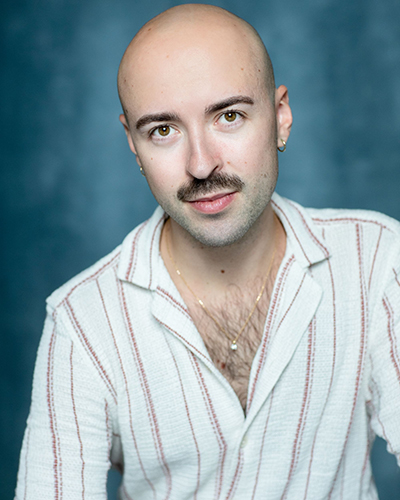
Rob Madge / Headshot credit: PND Photography
What advice would you give to other performers who are looking to make their own work?
I think writer’s block is the hardest thing to get past. It’s the hardest thing when you’re looking at a blank piece of paper or you have an idea in your mind, but you’re not quite sure how to articulate it. I ended up voice-noting most of the dialogue because I find it hard to actually look at a page. Obviously, that’s all dreadful and then you have to change it all, but at least you put something on the page. So, whatever your process might be, don’t panic at the idea of finishing. Just get it started. It’ll be a long process, but you’ll get there in the end.
Also, collaboration is key. You might be the only one on the stage saying the words, but I do not consider My Son’s a Queer a solo show. There were so many brilliant collaborators who I tested ideas with – even if it’s spitballing ideas with your mates in the pub or asking for their opinions and their experiences – that will influence your work and open up so many doors.
If you think you can only say the material that’s in your brain alone then it’s limiting, and it makes you panic. Opening up to people about your project would be my number one tip.
You appear in Panto at The London Palladium every year, what draws you to it?
I saw [Julian Clary] at the panto in Birmingham when I was six years old and there was something in the idea of a guy wearing the most beautiful, outrageously gorgeous costumes and making people laugh at the same time.
I think panto is the most honest art form in theatre because it acknowledges that there is a whole group of people watching you and you are there for them. Theatre that pretends there’s no audience there, I sometimes struggle to get on board with.
That’s what makes it so special – that shared experience between audience and performer. It’s why I loved doing My Son’s a Queer as well, because [the audience] were the other characters and actors in the show. When you feel like you’ve got that reciprocal relationship, there’s nothing like it.
Do you have any advice for how actors can use social media to promote themselves?
Just do what you do best. When you are in auditions in the industry, you can spend so long trying to fit yourself into the box that they want you to be in. I spent so long thinking it wasn’t the right thing to do. But actually, when I did, it ended up opening up all these possibilities. So, don’t doubt your ability and just show yourself off. Don’t be ashamed about sharing your talent.
So many of us feel [like] we should keep it to ourselves, and we shouldn’t show off. I encourage people to show off. We need it. We need to see the talent, it deserves to be seen, so trust your ability and share it and retweet it.
What are your plans for the future? Do you see yourself continuing in theatre or making a move to TV and film?
Honestly, I couldn’t tell you. I’m very open to whatever comes around. I’ve spent a long time doing musicals, [so would] love to do a play so I don’t have to worry about belting a high note at the end of the show. And of course, who wouldn’t love to do a spot on telly. Stay tuned and we’ll see what happens.
And finally, what would be your dream role?
Things are getting much more exciting in terms of roles that are now available in the past couple of years. People have just got so much more open-minded and that creates more exciting pieces of theatre. And I just love what they’ve done with Cabaret. I mean, that show has always been very queer, but this specific version of it is so bold and unashamedly queer. I’d love to do something along those lines. Maybe not necessarily that show, but a role like ’The Emcee’. That’s always been my dream role to be totally frank. A role like that where it can be played by absolutely anybody. I love those omnipresent narrator kind of roles, I think they’re dead camp.
2026 Update
As it turns out, Rob didn’t have to wait long to manifest that dream. In 2025, they stepped into the iconic boots of ‘The Emcee’ in the West End’s critically acclaimed production of Cabaret at the Playhouse Theatre, earning rave reviews for bringing their signature energy, vulnerability, and brilliant theatricality to the role.
Beyond the Kit Kat Club, Rob’s also become a beloved staple of the annual London Palladium Pantomime, developed fresh work for both stage and social media, and toured My Son’s a Queer globally, cementing their status as a powerhouse multi-hyphenate in the industry.
You can now book tickets to see ‘My Son’s a Queer (But What Can You Do?) when it returns to the stage at Apollo Theatre, London from 16 September – 4 October 2026.