
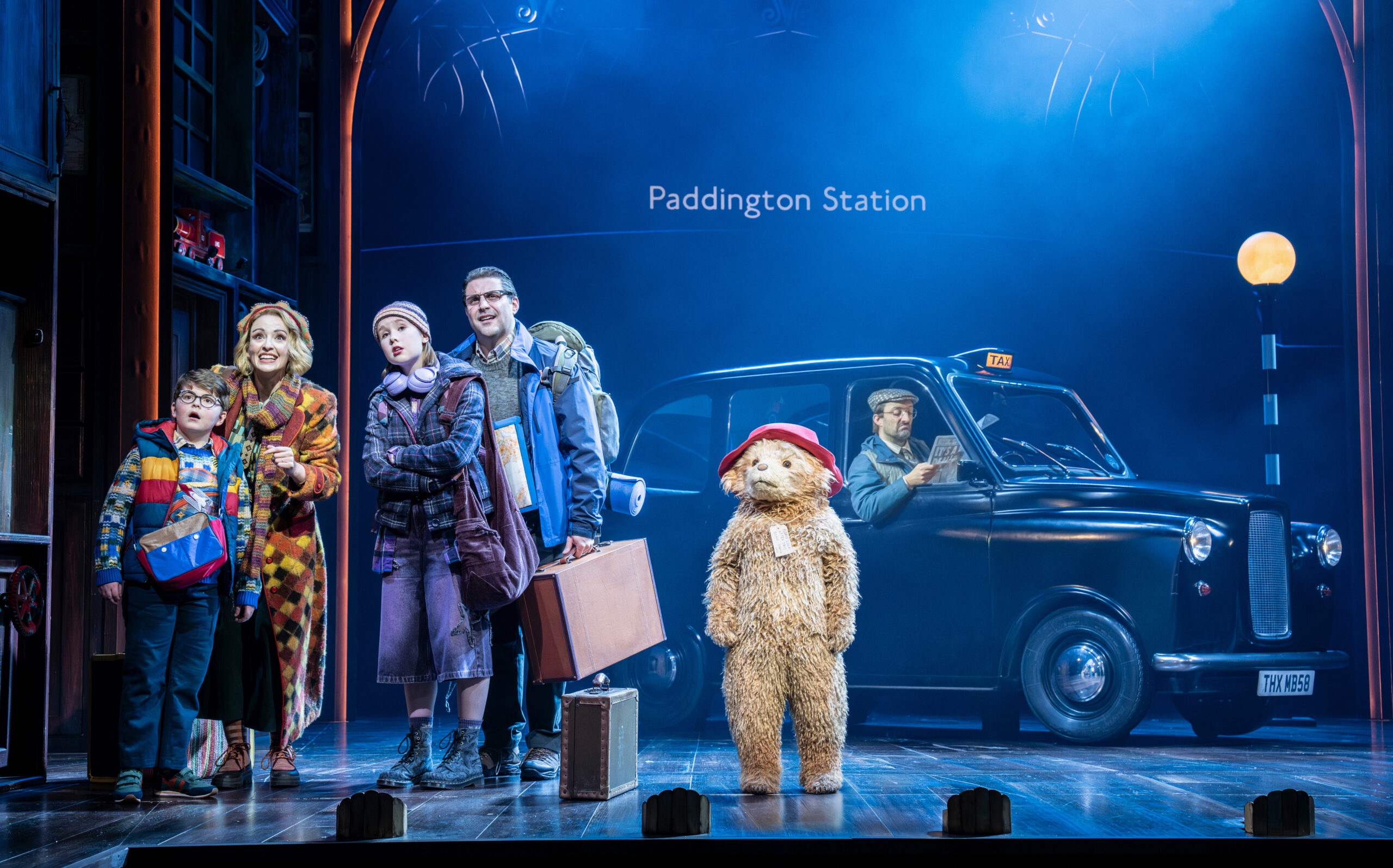
West End swing Rose O’Reilly shares her whirlwind journey to centre stage.
When an emergency calls in the theatre world, swings are the unsung heroes who step up to save the show. Cork-born actor Rose O’Reilly found herself putting that exact resilience to the test when she was called on to perform the role of ‘Millicent Clyde’ in Paddington The Musical with just four hours’ notice. From her early training in Ireland to making her mark in London’s West End, Rose opens up about the high-stakes reality of swinging 10 different tracks, managing pre-show nerves, and trusting her preparation when the spotlight suddenly shines.
Hi Rose. Can you tell us a bit about your background and what led you into acting?
I grew up in Cork in Ireland and my mum put me into musical theatre when I was three. I went to a school in Cork called Montforts and it was actually in my primary school they put a big focus on it. We had musical theatre lessons every Tuesday and I remember really looking forward to them.
There was one teacher at the time, Mr. O’Sullivan – but now he’s one of my friends and he’s called Dane O’Sullivan – and he was fantastic. I just absolutely loved his teachings. We would put on little productions of Wicked and Mamma Mia, it was fun. I found out that he also worked at a drama school called the Performers Academy, so I followed him there. I joined at the age of seven and I stayed until I was 18. It was just an after school activity but when I was there, I decided that I wanted to take it seriously and I looked up different drama schools in London.
I knew I wanted to [train] in London because the West End was my dream. I started researching, and created a list of schools I wanted to audition for. I went to my parents with it and we flew back and forth doing auditions and then eventually I got into Urdang.
I chose Urdang for multiple different reasons. I thought they were fantastic and they scared me the most. It was one of those ones where I was like, “whoa, I feel like I could get some great training here”. And I did! They were absolutely fantastic and I owe so much to them. And then I got my wonderful agent and here I am, I guess.
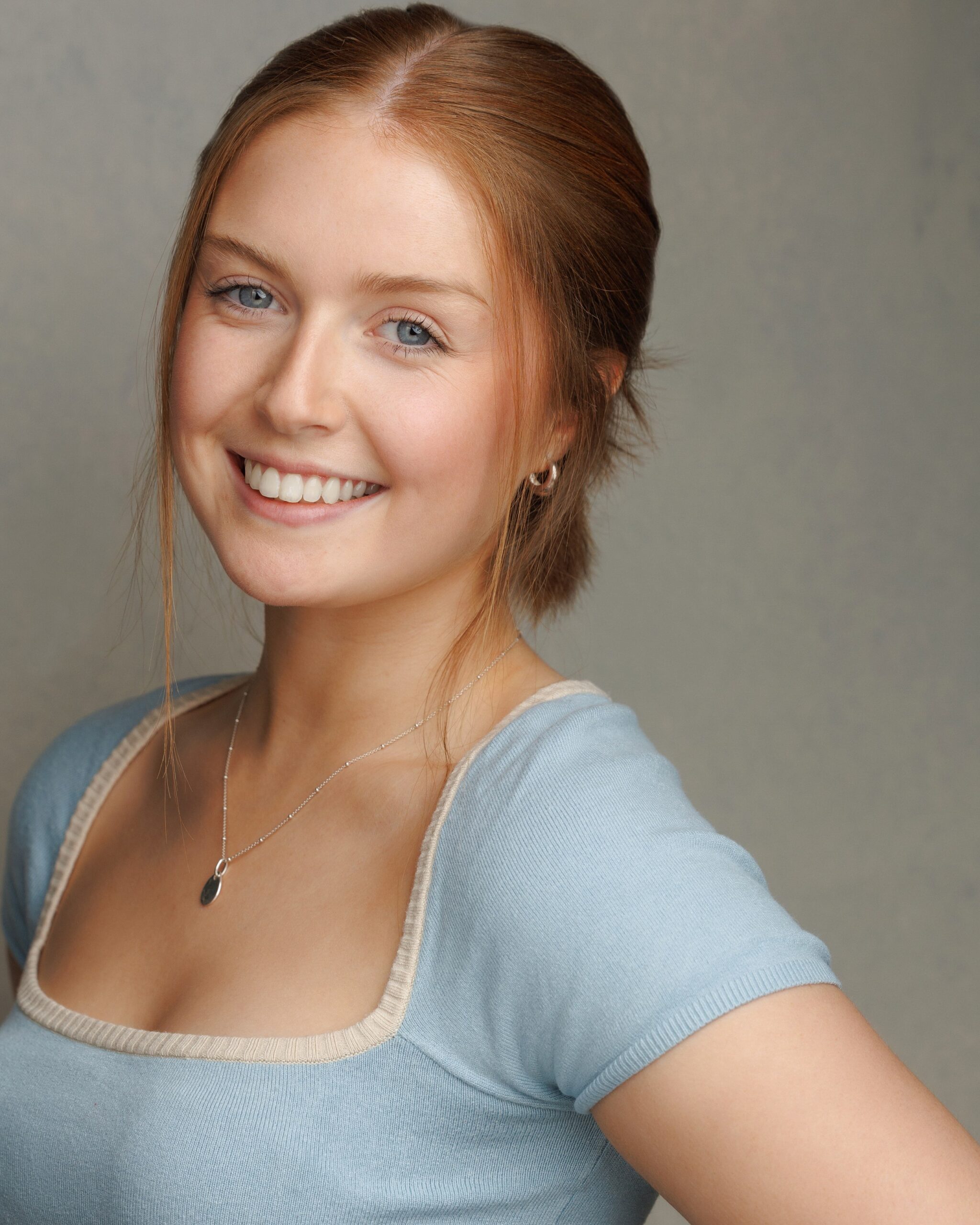
Rose O’Reilly. Headshot by Adam Hills
How did you get cast in Paddington?
Initially I got cast in Grease The Immersive Movie Musical by Pippa Ailion and Natalie Gallacher and they’re the same casting team for Paddington The Musical. I had about three or four auditions for Paddington – they were close to the finals at that point. I hadn’t graduated from Urdang yet so it was one of those ones where I had to not get my hopes up too much but obviously, I really wanted it. When I did get it, my god, there were many tears.
Can you tell us about your role in the show?
I am an offstage swing. and I cover 10 tracks in the ensemble. I’m also first cover ‘Judy Brown’ and I am third cover ‘Lady Sloane’.
“It’s always been my dream to play a role like [Millicent Clyde] so I felt like it was one of those moments where an opportunity presented itself and I couldn’t not just grab it with both hands.”
Recently you went on stage as ‘Millicent Clyde’, who wasn’t one of your tracks. Can you tell us a bit about the experience?
I felt very nervous but it’s always been my dream to play a role like this so I felt like it was one of those moments where an opportunity presented itself and I couldn’t not just grab it with both hands.
I got the call around 11 or 12 and I was in the theatre by 1pm so I didn’t really have time to process it. I had a massive support system around me. My associate choreographer, Erica Stubbs, came in, and my associate director, Toby Murray, Tom Edden came in early to run lines with me and the producer, Charlie Bath, was there as soon as I got into the theatre as well as my assistant company manager, Shauna Kimberley. There was a level of, “okay, we’ve got a job to do” but there was also this kindness and a genuine need to see if I was okay. Everyone was lovely. Looking back on the day I know I was scared but I actually had so much fun. Even putting the costumes on I was like, “Whoa this is cool.” I was very happy.
How did you prepare and get ready to perform in just four hours?
It’s all a blur! The [team] said, “Why don’t you come in and we’ll just sing it through.” So I stood on stage with a handheld mic because I wanted to sing it in the space because I’ve never sung a song like that in a theatre and I had no idea what that even felt like. We laugh about it now because I was just doing karaoke! It’s quite funny to look back on. I sang the two songs and that felt good.
That’s when Erica and Toby came in. Because I had just sung it, the first thing Erica did was slowly walk me through the blocking of Pretty Little Dead Things, which is the first thing that Millicent does. [Erica] taught it to me and that went in so I started to feel a bit more confident and then we just took it scene by scene in act one. Looking back, I’m surprised how calm I was. You never know what you would do in that situation until you’re in it and apparently I was calm, so that’s good!
We have the most loveliest wardrobe team, but bless them, as they were fitting me, I was just saying my lines over and over again. And they were like, “How does that feel?” And I was like, “Yeah, it feels great.” And then kept saying my line. I had learned Act One down at that point.
We ran some technical things for safety, and stage management had a list of things they needed to tick off because there’s one bit where I deal with a pyro and we all need to feel comfortable with me doing that. At 5pm I started looking at Act Two, which is terrifying to think about.
Then the company came in at 5.30pm and we had our cuddles and my confidence was boosted by them, which was very much needed. We then ran three or four numbers that Millicent is featured in and we didn’t stop rehearsing until, I remember checking my phone, 6.50pm and I was like, “I have to go get ready.”
Every second I was saying my lines over and over again, I was being helped and reminded of the blocking, even while I was doing my make-up and getting my wig on, I was still rehearsing. I never stopped rehearsing but then there was a moment where I was silent. Five minutes of quiet in my brain right before I went on.
The nice thing about Millicent is she’s not on stage for a prolonged period of time so I could go off stage and look at the script. I was very fortunate in that sense. Erica and Toby were in the wings with me with the script and we took it scene by scene, learning the lines.
By pure chance, my family was in the audience. My family live in Cork and my mum and dad were there the night before because I was scheduled to be on for an ensemble track – as a swing, you get confirmed dates if someone’s on holiday – so they saw me the night before. They were with me when I got the call the next morning. Their flight was at 7pm but when I told my mum, she was like, “Right, we’re staying. We’re cancelling our flight.” My aunt and uncle and cousins had tickets to the show along with my best friend and her partner and then the producers very kindly got my parents and my partner tickets to the show. I don’t think I’ve ever had so many people watch me at once, and I’ve been in this show for a year! I couldn’t believe my luck and it was absolutely lovely. I could feel their support.
Did you do any grounding exercises before you went on stage?
I do this thing where I wiggle my fingers. I do it before I dance as well. I was doing a lot of that right before I went on and just kind of shaking it out. I think people felt like maybe I needed to be alone because when I get nervous I get really talkative and a bit hyper.
Right before I went on, I took three big deep breaths and I went quite calm. In those five minutes, standing in the wings, I tried my best to calm myself down and just be quiet. I think that really helped me go on for the first scene as I just felt really focused and locked in.
What’s something about the reality of being a swing that you can’t truly learn until you’re in a theatre?
One thing that I struggled with is that it’s okay not to be perfect. It was my first time doing something where you don’t actually get to have a full rehearsal process. The gorgeous swings that I work with, especially my dance captains Katie Lee and Sam Lathwood, were so good at saying, “It’s okay to not be on the right number one day.” It’s such a mad thing to wrap your head around. You can rehearse and I could sit in my dressing room and study it, but there’s nothing like going on stage in front of an audience and doing a whole track that you might never have rehearsed.
Obviously, we run things at warm-up and we get as much rehearsal in as possible, but sometimes you’re thrown on mid show. I think it’s really important to learn if you finish that show for 80% of it you were on the right mark and you had the right prop and you were in the right place at the right time and didn’t bump into anyone, that is okay and you’ve done a good job.
You know what, if there’s 20% where I feel like I struggled or didn’t feel like I performed well because I was worried about bumping into someone or I was thinking about my cues and stuff, that’s okay, because the next time you do it, you’ll enjoy it more.
On a debut day, it’s so nerve-wracking and I’ve had to learn to be more gentle with myself and know that it’s okay to not do the track 100% perfectly because we’re all human and we make mistakes.
“It’s so fun and I think everyone should swing at least once in their career because the level of understanding that you have of the show as a whole is incredible.”
What qualities do you think actors need to be a swing?
This is my first time being a swing so I was very intimidated. People can be swings in different ways but I personally found it really helpful to have cheat sheets. I had every bit of information that I needed listed, whereas some people make their swing map, some people have the show on a recording and they watch it over and over again – It really depends on the way your brain works.
To be a swing, I think you have to be very hardworking and willing to put the work in outside of the rehearsal. I personally don’t think that you can learn all your tracks at once, I think you’ve got to pick one – usually you’ll be given a priority – and then slowly make your way through. That’s how I did it, I focused on one or two at first. After rehearsal, I went home and drew up my swing maps, I was doing that work outside of the rehearsal room, which I’m very grateful for now because it makes the actual shows more enjoyable because I feel prepared. You’ve got to be organised and be able to pick up that level of detail.
It’s really hard because, yes, you can be on the right number, you can have your right depth, you can have the right prop, but you’ve also got to perform at the same time so your brain is doing a million different things at once. But it’s so fun and I think everyone should swing at least once in their career because the level of understanding that you have of the show as a whole is incredible.
Ireland’s got a rich tradition of storytelling and song. How does your background shape your approach to being a performer?
Cork is such a small little place, but it’s full of so many incredible artists and aspiring actors and aspiring musical theatre performers. We’ve got the Cork Opera House that does a production every year, we do a Pantomime every year that has incredible performers and I think it needs to be recognised more. It’s such a small place, but Irish people are so talented and we come from that musical trad background.
I’m very grateful that I can be here in London, following my dreams and being on the West End, but I can always go back to Cork and still sit in a pub and have traditional Irish music playing. I think that growing up with that definitely helped inspire me.
I look back at the acting scene and there are so many actors who are from Cork and from Ireland and I think there’s such a community about it. If I’m ever in an audition and I hear an Irish accent, my ear pricks up!
What’s the best piece of ad advice you’ve been given about acting?
My Paddington choreographer, Ellen Kane, said that everything we do is storytelling. As a swing, that really helped me because you’re always focusing on being on the right number but if you just take it back and understand that you’re telling a story – and yes there’s dynamics and there’s movements and you have to be sharp – but strip it all back and think about the story that you’re telling.
For example, playing ‘Judy Brown’, she has a character arc that she goes on. When you first meet her and she’s a moody little teenager and she goes on this journey that Paddington brings the family on and at the end you see this gorgeous relationship with her and her mother and she comes out of her shell a little bit. So from the beginning and all the way throughout [that’s] the story that you’re telling in every scene. It becomes less about, ‘I’m saying this line and I have to say it with this intention’ and more about the overall story that I’m telling. It makes it more natural.
What are you hoping for in your future?
I’ve been doing musical theatre since I was young and It’s always been the dream to play a leading role in a show. Playing ‘Millicent Clyde’ has given me the confidence to see myself doing that. I want to continue doing musical theatre.
Rose’s whirlwind debut proves that stepping into the unknown is often the exact spark needed to unlock a performer’s true potential. By leaning on her support system, keeping her focus locked on storytelling, and embracing the inevitable imperfections of live theatre, she turned a high-pressure situation into a career-defining milestone. With her sights set on leading roles in the future, Rose has clearly demonstrated she has both the talent and the nerve to shine on the West End stage.
Don’t miss your next opportunity. Sign in to your account or join Spotlight today to get discovered by the teams behind the stage.