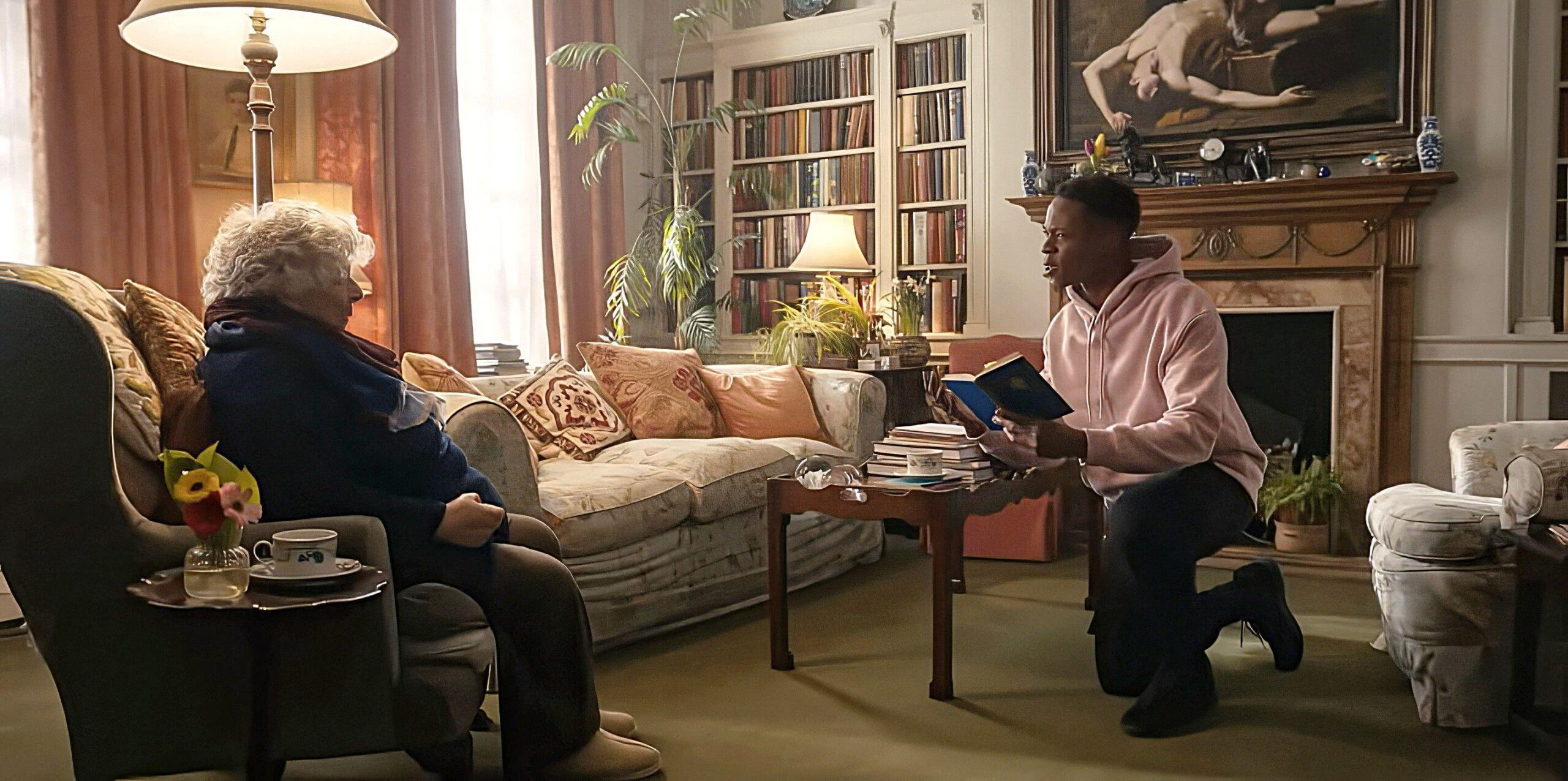
From professional football to the Oscars, Alistair Nwachukwu discusses his remarkable journey.
Alistair Nwachukwu’s path to the stage wasn’t exactly linear. Five years ago, he was a professional footballer for Millwall. Today, he’s a LAMDA graduate leading a major Royal Shakespeare Company (RSC) musical and starring in an Oscar-nominated short film.
After a devastating injury cut his athletic career short, Alistair rediscovered a childhood spark for storytelling that eventually led him to drama school. Since graduating in 2021, he has had an extraordinary career. From the high-fantasy sets of Netflix’s Shadow and Bone to a deeply moving partnership with Miriam Margolyes in the acclaimed short A Friend of Dorothy, Alistair has quickly become one of the industry’s most versatile young talents.
Currently starring as ‘William Kamkwamba’ in the RSC’s The Boy Who Harnessed the Wind, Alistair sat down with Spotlight to discuss the discipline of his “9-to-9” training, overcoming imposter syndrome in his first musical lead, and the life-changing lesson of staying present – whether you’re on a West End stage or a film set in Budapest.
Hi Alistair. Can you tell us about the play you’re currently in?
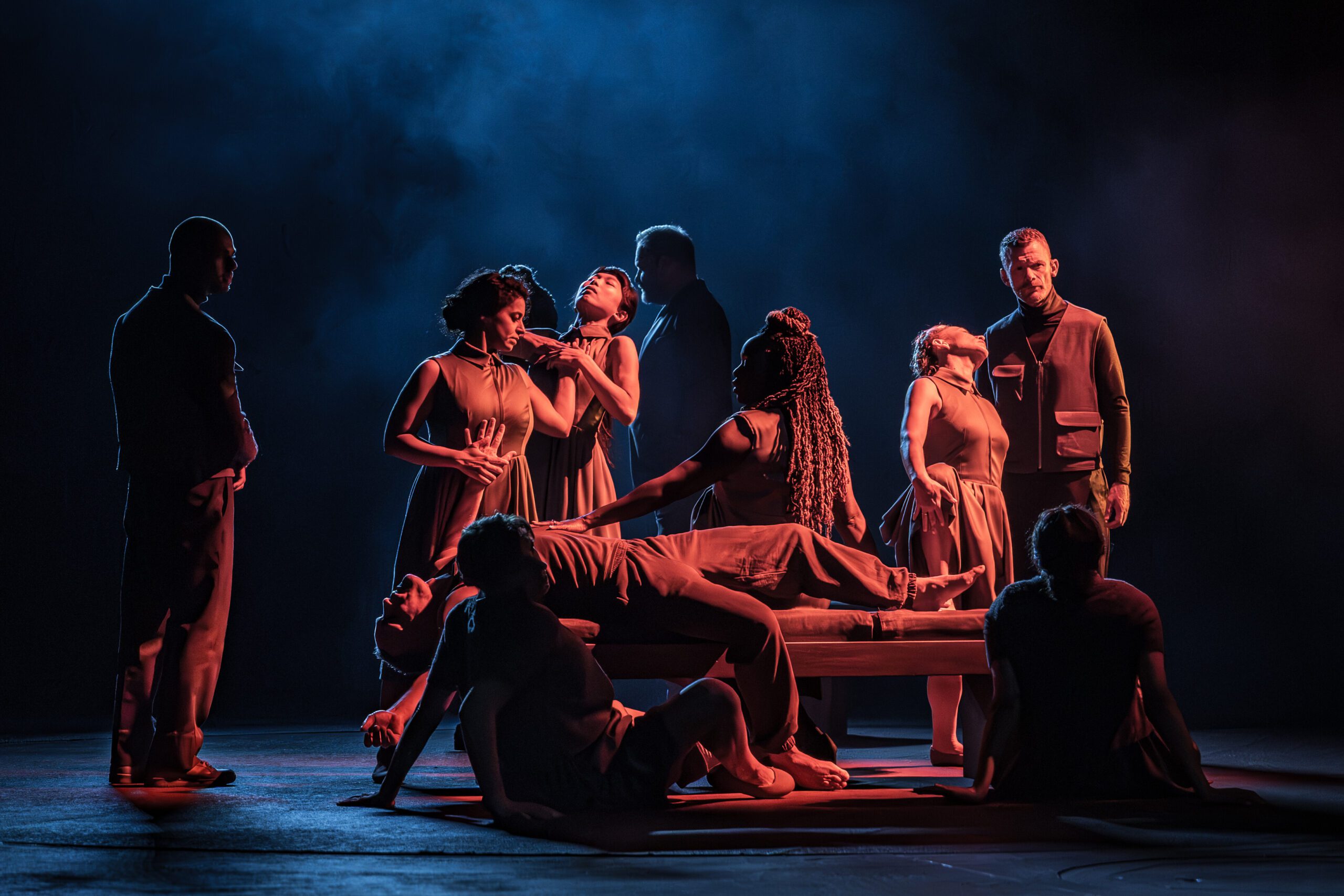
I’m doing a play at the RSC called The Boy Who Harnessed the Wind. It’s a musical about a boy called William Kamkwamba, who I’m playing. It’s a true story set in Malawi in 2001. There’s a famine and William created this big windmill out of scrap materials which created wind power, which created electricity, which then created water and saved the whole village. It’s a beautiful story. I read the book and saw the film years ago – I’m just really grateful [to be in it]. Working with Lynette Linton, the director, has been incredible.
We finish next week, which is sad, but it’s been really fun. It’s coming to Soho Place in April.
How did you become involved with ‘The Boy That Harnessed The Wind’?
I’ve been with the team for three years. It started with one workshop in 2023, then we did two workshops in 2024 and another two at the end of 2025. I was asked if I’d like to audition for the lead role. I’d never done a musical in my life and never been the lead in anything on the stage before, so I thought, “You know what? Yeah.”
A bit of imposter syndrome kicked in. I thought, “There’s no way I can do a musical, I’m an actor.” I haven’t really trained to sing, even though I like to sing in the shower, but singing on stage eight shows a week is different. I thought, “Okay, let me try.” They gave me the role, which was amazing and so I ended up taking singing lessons for six months just to get my voice ready for the stage.
How do you prepare your voice for singing eight shows a week?
Steaming my voice is very important. I drink like three litres of water and no alcohol. And then warming up all the time – warming up, warming down. I also take singing lessons when I can and also work with the play’s singing coach, Ashton Moore.
How do you relax and come back to yourself after a day on stage?
The river in Stratford is so beautiful, so when I finish, I go for a long walk along the river and listen to some music. It’s about a 10-minute walk from the theatre to my home.
Who’s on your playlist?
Max Richter and Stevie Wonder.
How did you get into acting?
I started acting when I was 26. Before that, I was playing football for Millwall professionally. Then I broke my femur and dislocated my knee and that was the end of my football career. I was like, “No!” because I really wanted to be a footballer. I didn’t know what I was going to do.
I ended up going to university and studied marketing for two years and I worked in retail. One day, my best friend was going to an acting class and asked if I wanted to go. I went and kept going. Then I went to LAMDA for four years and graduated drama school in 2021. It’s been a bit of a journey!
When did you decide acting was what you wanted to do?
When I was really young I always used to play with my toys, imagining different worlds and then when I got into football that all kind of just died. When I went into secondary school, I wanted to be like a boy’s boy, playing football. So it all just died and then when my friend told me to come to her drama class, that old flame reignited again.
I had encouragement from all the teachers, they really saw me and wanted the best from me. I really felt seen. That’s when I just thought that I’m going to really try and pursue this.
How has your background shaped your perspective as a performer?
With football, you have to be disciplined. Playing for Millwall, or any professional team, you have to be there on time, you’re working outside of the hours that you actually have to work. It was the same at LAMDA – I was there 9 till 9 every single day and sometimes weekends as well.
I think those two experiences have really shaped me coming into the industry. Now, when I’m going into auditions, I’m off-book, I’m always on time, I’ve done research about the cast and directors, researched the project, read the scripts a few times. All those little things make a huge difference. I’m dyslexic as well, so I have to work a little bit harder.
Your first role was in ‘Shadow and Bone’. What were some of the biggest lessons you took from that experience?
That was an amazing experience. I was filming in Budapest for six months and that was my first time ever being away from home for a job. One thing I learned is to be kind to everyone. It’s such a big set with people working in hair, make-up, costume, the producers, the other actors. It’s a big village of people to make this story happen. Being kind to everyone is so important, it goes a long way. It’s the things outside of the actual acting that really help.
Were you more of a stage actor at drama school, and if so, what was it like working on screen?
We did a few modules on screen, but it’s definitely more stage at LAMDA. Ben Barnes was the lead of the whole show and he was so nice. In every scene, he was just so present, and when I wasn’t called, I watched him doing his scenes and he would have such a control over the room. He was so generous with his fellow actors and he really listened. I’d just graduated from drama school and I was really mesmerised by how comfortable and at ease he was on set. I think he really helped me to find that too.
What was it like working with lots of green screens?
At drama school we used [the] Michael Chekhov [technique], where we used our imagination to see pigs in the sky or snakes on the ground. So when I’d have to see monsters coming at me and I had a prosthetic arm that was ripped open by this monster, that really helped, because I’d done all that work at drama school using my imagination.
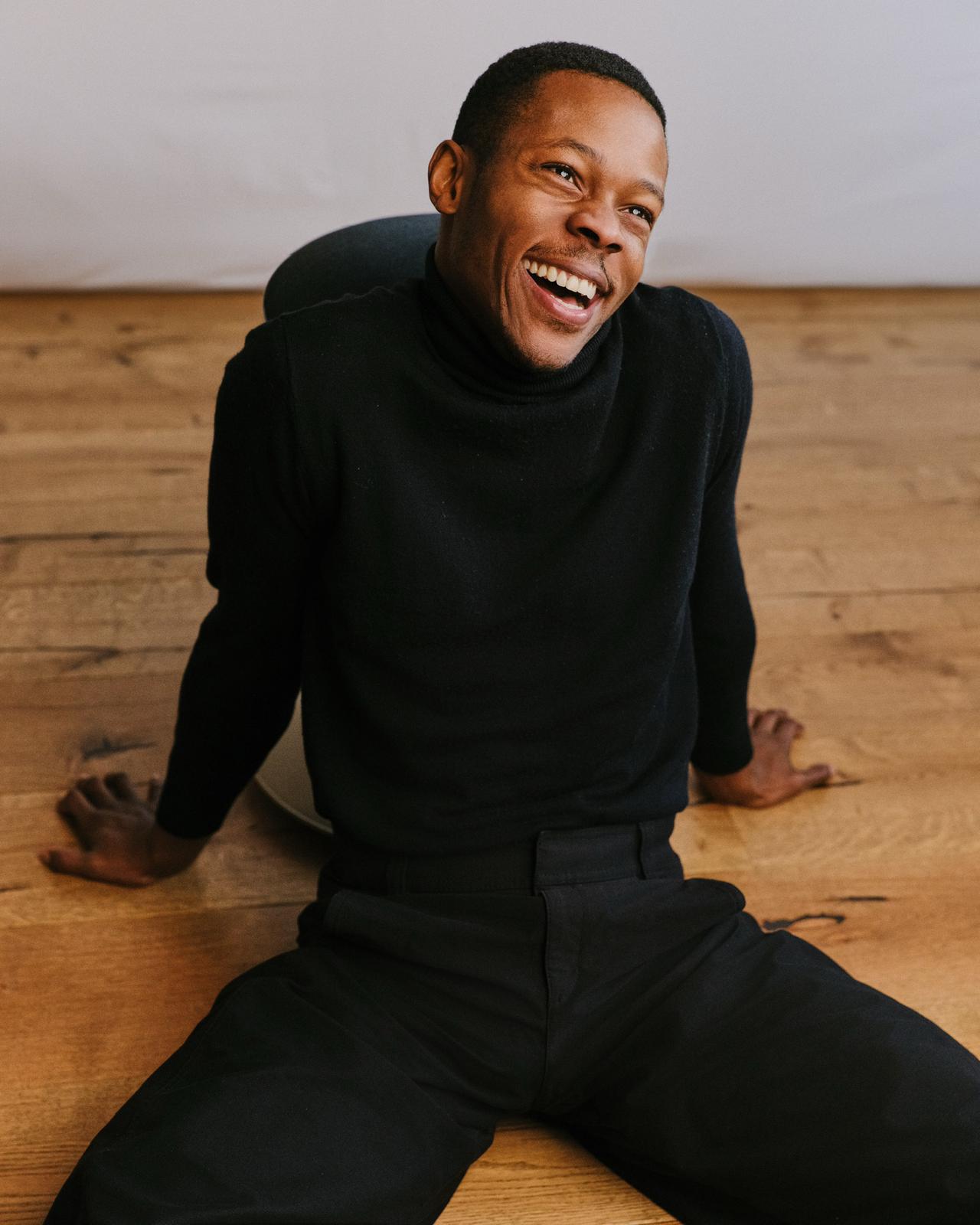
Alistair Nwachukwu / Image credit: AKTA Photography
How has your definition of being a scene partner evolved after working with people like Ben Barnes and Miriam Margolyes in ‘A Friend of Dorothy’?
It’s definitely evolved working with Miriam because she uses her heart. She’s got such a big heart and she’s so open and warm. She drops into this level of vulnerability that makes you, as a performer, drop into your level of vulnerability as well. Lee Knight, the director, created this amazing space for us to really play and be vulnerable and see each other. The combination of Lee and Miriam made it possible to just really go from the heart.
Lee is probably the best director I’ve ever worked with. I think, because he’s an actor, he really understands how we work. He’s an actor’s director for sure and it was such a joy working with him. He’d see little things in me and push me to go a bit further.
Casting director Tom Payne said there was a moment in your audition for ‘A Friend of Dorothy’ where they all knew you were the actor for the role. What was your perspective on that audition process?
I was nervous being in that room! I had no idea that Miriam and Stephen Fry were attached. It was an open casting call. I wasn’t really working that much so I thought, “Let me just send a self-tape in.” And then they invited me into the room for the final round.
All the producers were there, the casting directors were there, Lee’s there. I did the scene once and they’re like, “Okay, it’s fine.” And then Lee directs me and then something shifts inside of me. I can’t remember exactly what he said, but it just landed on me and when I looked at my scene partner again to do the scene, it was just all there. She got emotional, I got emotional and then the room went silent. In that moment, I still thought, “Okay, let’s see what happens.” Lee told me afterwards, when that happened, they all knew I got the job.
How did you and Miriam build a bond that’s so apparent when you’re on screen together as ‘JJ’ and ‘Dorothy’?
We had a Zoom call with Lee a week before and we just chatted about life. I spoke about my journey, how I got into acting, and she spoke about her journey and how she got into acting. And then we met in person on set and I think Lee just did an amazing job of making sure that we were always in conversation with each other. She would invite me to her changing room and talk to me about her life and would feed me these little snacks that she likes to eat. She’s just a really open book. When she likes you, she really takes you under her wing, so when we were on set, it was so easy because we’d created this bond. She’s so nice. We’re friends and we WhatsApp all the time.
Miriam is famously candid. How did her energy help you find the vulnerability you needed for your character?
In one of the scenes, she said to me, “We’re in this together.” And she held my hand before we did the scene. What I got from that is that I don’t have to do anything, I just need to be present, look her in the eyes, say these words and mean them. And she just has to do the same. It’s like a love story between us, it’s beautiful. We only filmed for four days but it was so magical. I’ll never forget it.
What was the point when you realised ‘A Friend of Dorothy’ was an Oscar contender?
When it won at the Indy Shorts Festival, I thought it might potentially go on the [Oscars] long list. And then it got on the long list, and then it got on the short list and I was like, “No way, it’s going to be nominated!?” There was a specific date [the nominations were announced] and I was waiting up all night and then it got nominated for an Oscar. We all couldn’t believe it. Four days of filming – now we’re at the Oscars. Unbelievable.
What’s your take on the industry at the moment?
I’ve got a lot of friends who’ve just graduated from drama school and they’re finding it really hard to get their foot in the door. It’s difficult because I hear from my agent that there’s not a lot of jobs, that the industry is quiet, and I hear from other people that [productions] just want faces. They just want names, people who are already established. So it’s difficult. And there are so many actors in the UK. It’s tough. I think more people deserve hope.
What ambition do you have for yourself as an actor?
I want to keep on working, doing stage, film and TV, and telling powerful stories that really matter like A Friend of Dorothy and The Boy Who Harnessed The Wind. I’m open to anything that comes.
A Friend of Dorothy is being turned into a feature length film. Lee’s developing that right now so it’ll probably end up being filmed next year.
What advice would you share with actors reading this?
Don’t compare yourself to others. As the saying goes, comparison is the thief of joy. Everyone’s journey is completely different so try and find the joy in being able to act and play. I know that’s quite difficult. When I came out of drama school, I thought, “I need to get this agent and to do this TV show, I need to be at the National.” But thinking all that takes you away from why you love it.
Quickfire Questions:
- If you could have a chat with any actor, past or present, who would it be and why? Sidney Poitier, because he’s a legend who did so much for the Black community. He opened up so many doors for so many actors that I look up to and he’s an amazing actor.
- What would you be doing if you weren’t acting? I’d be a footballer or maybe a football coach.
- One song that perfectly describes your mood today: It’s really sunny outside and we were talking about Stevie Wonder, so maybe Isn’t She Lovely.
- Best advice you’ve received from someone in the industry: Don’t take yourself too seriously.
- What’s something you’ve watched or listened to that you’d recommend? Bryan Cranston’s advice for actors. It’s on YouTube. It’s amazing.
As Alistair prepares to take The Boy Who Harnessed the Wind to London’s @sohoplace and looks toward a feature-length adaptation of A Friend of Dorothy, his trajectory remains firmly upward. Yet, despite the Oscar buzz and RSC leads, he remains grounded in the discipline of the craft.
By focusing on joy rather than the pressure, Alistair serves as a powerful reminder that while the journey to the stage may be unexpected, staying present is what keeps you there. For an actor who once thought his career ended on a football pitch, it’s clear that Alistair Nwachukwu is only just beginning.
Key takeaways:
- Treat your preparation with the same rigour as a professional athlete. Being off-book, researching the creative team, and arriving on time aren’t just polite – they’re the foundational habits that build a professional reputation.
- Don’t let a lack of formal training in a specific skill (like musical theatre) stop you. Alistair moved past imposter syndrome by committing to six months of intensive singing lessons to prepare his voice for an eight-show week.
- Whether working with green screens or legends like Miriam Margolyes, the job is the same. Stay present, look your partner in the eye and speak from the heart.
- Avoid the “thief of joy” that is comparison. Focus on the play and the storytelling rather than the external pressure of landing a specific agent or credit by a certain age.
Take a look at our website for more interviews and advice from casting directors.