From viral CEO roles to shooting seasons in a week, actor Bradley Peake explores the fast-paced, high-stakes world of the vertical drama industry.
Acting is an industry famously defined by the grandeur of the stage and the spectacle of the big screen, but for Bradley Peake, the most vital opportunities are currently happening on the smallest screens of all. Vertical dramas – ultra-short-form, mobile-first series viewed on platforms like ReelShort – have exploded in popularity, offering a high-speed frontier for the modern performer.
A Drama Studio London graduate who “fell into banking” whilst pursuing his passion for the craft, Bradley has quickly become a veteran of the format, with 12 vertical credits to his name in just two years.
In this interview, he pulls back the curtain on the “operatic extremities” of the genre, the logistical chaos of shooting an entire season in eight days, and how his background in physical theatre helps him navigate the unique demands of acting for a vertical lens.
What you’ll learn in this interview:
- Vertical dramas are an intense training ground for actors. Filming an entire season in seven to 10 days requires extreme mental agility, rapid line memorisation, and the ability to deliver high-stakes emotional performances in just one or two takes.
- Verticals have become a legitimate and prolific source of work for actors. Bradley’s transition from banking to 12 vertical credits within two years demonstrates the volume of opportunity currently available.
- On-set advocacy is important. Bradley provides insight into navigating last-minute script changes, ensuring intimacy coordinators are present, and vocalising concerns to ensure characters don’t fall foul of stereotypes.
- Many directors and crew members are graduates of prestigious institutions like the London Film School (LFS) so the sets of verticals can serve as networking hubs where actors can meet collaborators for their own passion projects.
- While they started with rigid archetypes and specific tropes, the verticals industry is rapidly diversifying to include LGBTQ+ storylines and a wider variety of genres to satisfy a global and highly-engaged fanbase.
Hi, Bradley! When did you first realise that you wanted to be an actor?
I think I always knew I wanted to get into it. I was always the kid running around in costume, cosplaying with my neighbours in East London, where I was born. When I was eight, we moved to Portugal and I followed in my sister’s footsteps and got into dancing. We used to go around as part of this performance troupe, doing performances everywhere in town.
When we came back to the UK in 2012, I started doing some musical theatre and I knew that acting was definitely the goal. I’ve always loved cinema and theatre.
What was your route into acting?
I went to drama school and did an MA. I actually went to it a bit later, as I intended to go right after school, but I wasn’t in the best place at the time, so things didn’t quite click for a variety of reasons. I focused on doing some part-time courses whilst navigating life and then I weirdly fell into banking for four and a half years, as you do. I was living the double life of working 9 to 5 at a bank and then doing acting at night, rehearsing, performing plays as part of this part-time course.
I reapplied to drama school, but I was ready to get going so I just applied to FDS schools that did one-year courses, and they were the Oxford School of Drama and Drama Studio London. I auditioned for both, got on the waiting list for Oxford, and accepted the offer from Drama Studio London. I actually got upgraded to an MA based off of my acting experience and my work experience, so suddenly I have an MA without doing a BA. It’s funny how life works out like that.
How did you start working in the world of vertical drama?
I’d graduated from Drama Studio in 2023 and then I started the whole life of a jobbing actor. I was lucky enough to do a feature a few months after graduating, which was great. But then comes that moment of, “Okay, well, what’s next?”
I got an agent late 2023, but I always have to be proactive and do stuff as I’m not someone to lay around. So, I was doing everything that I could, applying to as much stuff a day as possible, and I saw a job with a unique title, something I hadn’t seen before – My Gigolo Husband: The Billionaire’s Surprise – and that was one of the things that I applied to. I had no idea what it was. I got the role and that was the first [vertical drama]. We began filming at the end of January/early February 2024. Now, I’ve been a part of 12.
How does that line of work come your way?
When you’re first coming into it, the industry seems so daunting and so large. And of course, it is in some ways, but it’s the ‘Six Degrees of Bacon’, right? You’re always just one person away from that person. If you show up early, know your lines, do the job to the best of your ability, people will hopefully remember you, and then you get the next one and then the next one. Your name gets passed around. Maybe they’d have seen the show or the clients in China would’ve seen that show.
I was lucky that my first one did well. It was number one on the platform for a bit, and obviously that really helps. [Production companies] would write that they saw me in the other one, so they’d either like me to tape, or on occasion, give a direct offer. It’s a huge luxury and doesn’t happen that much even with these verticals despite the characters sometimes being quite similar. But on occasion, they do make a direct offer, which, of course, is something that every actor would love to have.
Is the process of self-tapes the same as any other production or is there anything different or unique about them?
Because a lot of the characters are in a corporate landscape, in the self-tape, you might be wearing a suit for the hundredth time to convey that character. If it’s the lead role, it’s typically the CEO of a company and so, like any other job, you’d want to maybe convey that. There’s obviously different opinions when you’re auditioning for a role.
If you’re playing a cowboy, maybe don’t have a cowboy hat on if you don’t need to! But because I know exactly what they’re looking for, I do put on a suit. Sometimes there are actually notes in the email from the casting director that the clients would like to see you well-polished or have your hair done up neatly, that kind of thing.
Do headshots or showreels vary from the traditional style?
Headshots are the same. Although they like to see what kind of body type you have. When I have my photography portfolio, I have my headshots, but then I do have a couple that’s a bit more medium shot or long shot to show the body a bit more because they do want to see that.
I do have a vertical showreel. Because it’s vertical, of course, you’ve got the big blocks on the side, so it’s not great mixing that with horizontal. So I do have a separate showreel. I have my showreels that are the standard horizontal, wider industry kind of showreels, and then classical monologue, contemporary monologue, all that kind of stuff. And I also have a vertical showreel.
QUOTE: “One of the myths around vertical dramas is that it’s just one extreme and another with nothing in between…it’s such a great acting challenge because you’re finding the wonderful nuances in between those operatic extremities.”
Would you say performing in verticals is more akin to a stage performance, screen performance, or something unique?
I would say it’s something unique. It’s probably closest to soap drama. Well, they basically are feature-length soap operas that are cut down into micro episodes. With the fast-paced nature of the narrative and a lot of the twists and turns, especially around the ‘money episodes’, around episodes seven and eight where there’s a big EastEnders, dun-dun-dun cliff-hanger, and they want people to start paying, there’s definitely a lot of emotional extremes and big things happening. So from an actor’s point of view, you have to be able to tap into that.
Something I’ve said quite a lot to actors and people I’ve spoken to about verticals is that I think it’s a great and healthy challenge for an actor because you’re having to go from one extreme emotion to another, but try and hopefully find the nuance in between. You know what the director and the client wants and what the format demands, but then, of course, you want to do work that is reflective of your capabilities as an actor, and there’s still room for that in vertical dramas. Despite the demands of the format, there’s so much room to make nuanced work that will be shown.
That’s probably one of the myths around vertical dramas, is that it’s just one extreme and then the other extreme and nothing in between. That can definitely be the case with some dramas, of course, but if you want to make the most of it, it’s such a great acting challenge, first and foremost, because you’re finding the wonderful nuances in between those operatic extremities.
QUOTE: “It’s a great and healthy challenge for an actor. You’re so used to learning lines at such a rapid rate that any other job feels like a walk in the park.”
How do you prepare for a role like that?
Very honestly, you don’t really have time to prepare. I think the most preparation time I ever had was two weeks. Usually, they’re like three days. It can sometimes be literally the night before. I’ve been cast when I’ve been away, three days before the shoot starts, flown back and went to set in the morning. You’re reading the script on your flight back and learning lines on the morning of what is about to be your biggest scene. And maybe you’re doing some stunts whilst you’re at it. It can very much feel like you’ve just been thrown into it.
It can be challenging but I also think it can be good because then when you do have the luxury of time for another job, it almost feels a bit more like a walk in the park because you’re so used to learning lines at such a rapid rate, acclimatising to an environment and crew and other cast members so quickly, acclimatising to the demands of the format and what you have to do in a day filming 10 to 12 episodes sometimes in a single day. It’s a lot. And I think it is a healthy challenge for actors. Obviously, there are always extremes which go too far, like 13 or 14-hour working days. But, here in the UK, when they’re shooting an average 12-hour working day, then it’s a great challenge within that context.
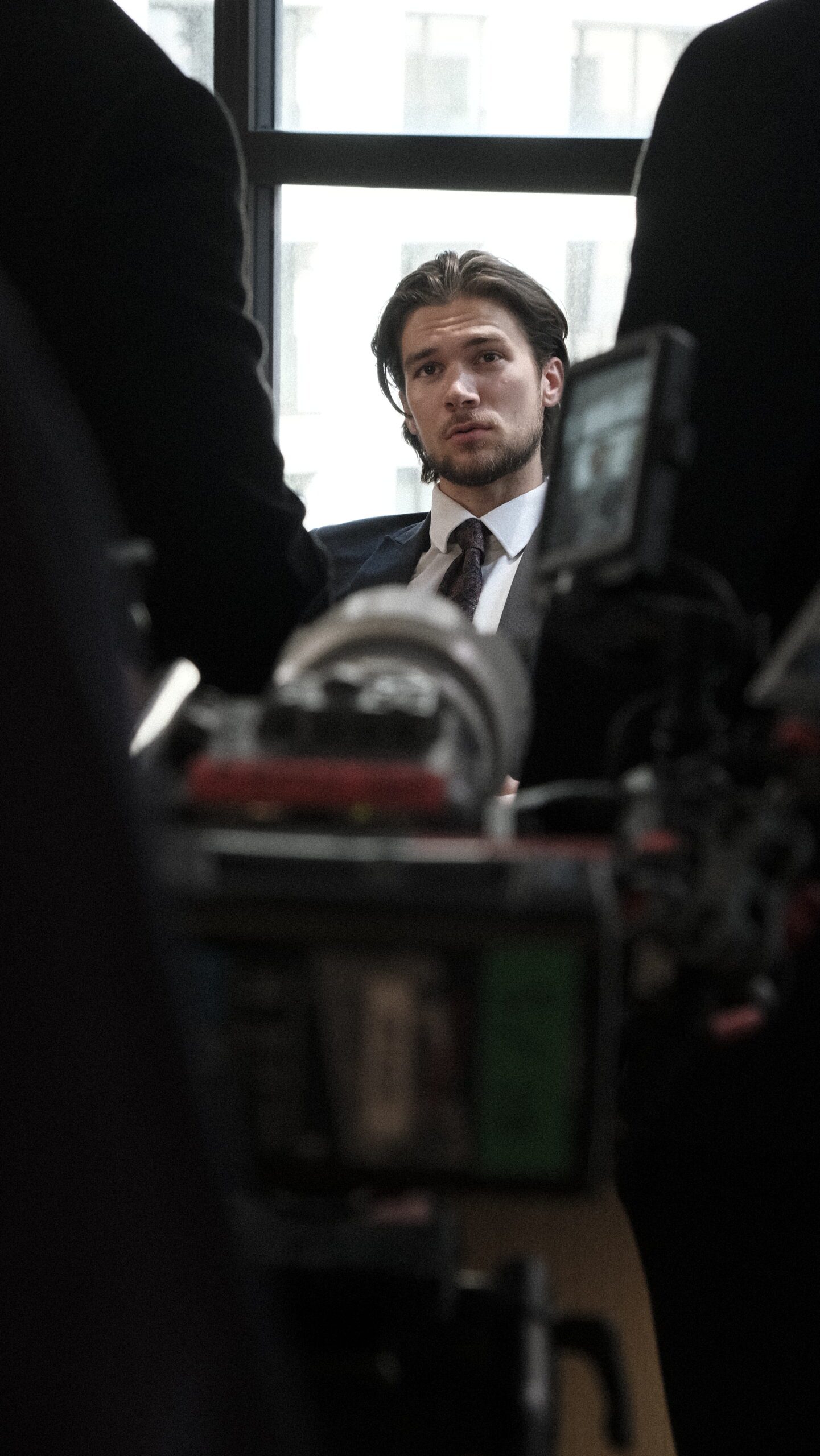
Image credit: Tianyu Zhang
How do you adapt to that and for the frequent script changes?
First and foremost, I think just trusting the director. Hopefully you’re working with a wonderful director. I’ve been very, very fortunate to have worked with a number of amazing directors. Truly wonderful, all pros, many of them graduates from LFS [London Film School] who know their stuff, who are advocates and fans of cinema and fans of working with actors and the way that actors should be worked with. So they’re always there to talk through the scene, to share any doubts, any concerns. And there are quite a few doubts and concerns, especially with some of the content in the scripts, things that don’t always translate maybe to a Western audience and things that you as an actor could flag. The directors and producers have always been very accommodating so when there are changes that maybe I’m not quite sure on, we have an open dialogue and if it’s something that we know we can work with and do, then great.
Obviously, your job as an actor is to get the lines down and do it. If maybe you struggle with lines, then of course, that could be tricky. I have worked on some sets where you can feel that because everything is so last minute… Maybe an actor got the script last night and they’re struggling, but you work through it. We all rally around, help each other do as many line runs as possible when we have a break in between takes.
Of course, that’s completely dependent on having the right crew, cast members, and director around you, which I’ve been lucky to have had, but I know some actors, sadly, have not always had that experience. I’ve always been blessed to have worked with great people.
What would a day on the set of a vertical drama look like?
This is within the context of being on a shoot where you’re staying in accommodation. You’ll come down, have breakfast with the crew and cast, and then you’ll get picked up and go to location. On the way there, you’re probably, as an actor, going over your sides and any final prep. You get there, then go straight into costume or make-up. And then like any set, it could be very fast-paced, and then suddenly you’re waiting around for a bit, which is a great moment to re-centre yourself, go over anything that you need to go over, and just enjoy being on set.
Being on set is a luxury when you’re a jobbing actor. I always find talking to people around me and getting involved really helps me because then I feel like I’m part of the whole thing. That really calms me and makes me feel centred. Then as soon as you’re called, you do your work.
The call time could be 6am or 8am but let’s say, 7am, and then you’re doing a 12-hour day. If you’re not needed for the whole day, then you’ll, obviously, be allowed to leave early and sometimes you can get dropped back. You usually have a really lovely lunch with nice catering. At the end of the working day, you’d normally have dinner with all the cast and crew again, and that’s it.
Like most sets, you’re with everyone from beginning till end, and then you have your little moment in the hotel room or wherever it is you’re staying to try and decompress and go over your lines for the next day.
Have you typically worked in the UK or abroad?
I personally just worked in the UK, although I have many actor friends who are working abroad in Istanbul, China, Vancouver, Tbilisi in Georgia. So yeah, they’re truly global. There are actors from all over doing verticals in China and abroad, but I’ve just been doing them in London. I’ve had an eye on potentially doing them elsewhere, it’s just not really happened yet.
ReelShort is the biggest platform in the US, and then it got a Brazil version. I’ve been talking to a Brazilian filmmaker who was a part of the most successful show there and they’re really capitalising on this. So now they’ve got Portuguese versions, which I’d love to do, and I speak Spanish, as well. A friend of mine actually was just on the Spanish-speaking one. So yeah, it’s definitely something I’ve got an eye on because, of course, as an actor, you want to use as many of your skills as possible. And it means more work.
QUOTE: “I ended up hiring an intimacy coordinator I met on the set of a vertical for a short film I made last year […] If it wasn’t for verticals, I’d never have met these incredibly talented people.”
If an actor’s new to vertical drama, what would you advise them to expect?
Know what you’re getting in for from a script perspective. Make sure that you’re 100% comfortable with the script because there can be lots of intimacy scenes and you want to know from the get-go what you’d potentially be involved in.
Make sure that you read through everything that they send you and be brave and feel free to ask them for more, especially if you haven’t seen the full script and really want to know everything that your character would be involved in, especially from an intimacy point of view. Although, they handle that very well and have intimacy coordinators. If they haven’t got an intimacy coordinator, then that’s a red flag.
I’ve had, honestly, the best experience with intimacy coordinators and the directors. They create a wonderful safe space. I actually ended up hiring an intimacy coordinator I met on set of a vertical for a short film I made last year. I also ended up hiring many different people from verticals for the short film – that was my passion project. If it wasn’t for verticals, I’d never have met these incredibly talented people.
Once you’re 100% sure of everything that your character will be doing, be prepared for the very fast-paced nature of the actual shooting itself. They’re doing a feature-length film basically in eight days. Be prepared for the fact that they’re probably only going to get one or two takes because they’ve got to move on.
With that, quick line learning, sometimes on the spot when things change, and being okay with changes as much as you possibly can, as long as it doesn’t interfere with any concerns or issues you have. If there are any concerns or issues, like there’s an intimacy bit that you weren’t aware of or it wasn’t in the original script, feel free to have open dialogue with the director around that.
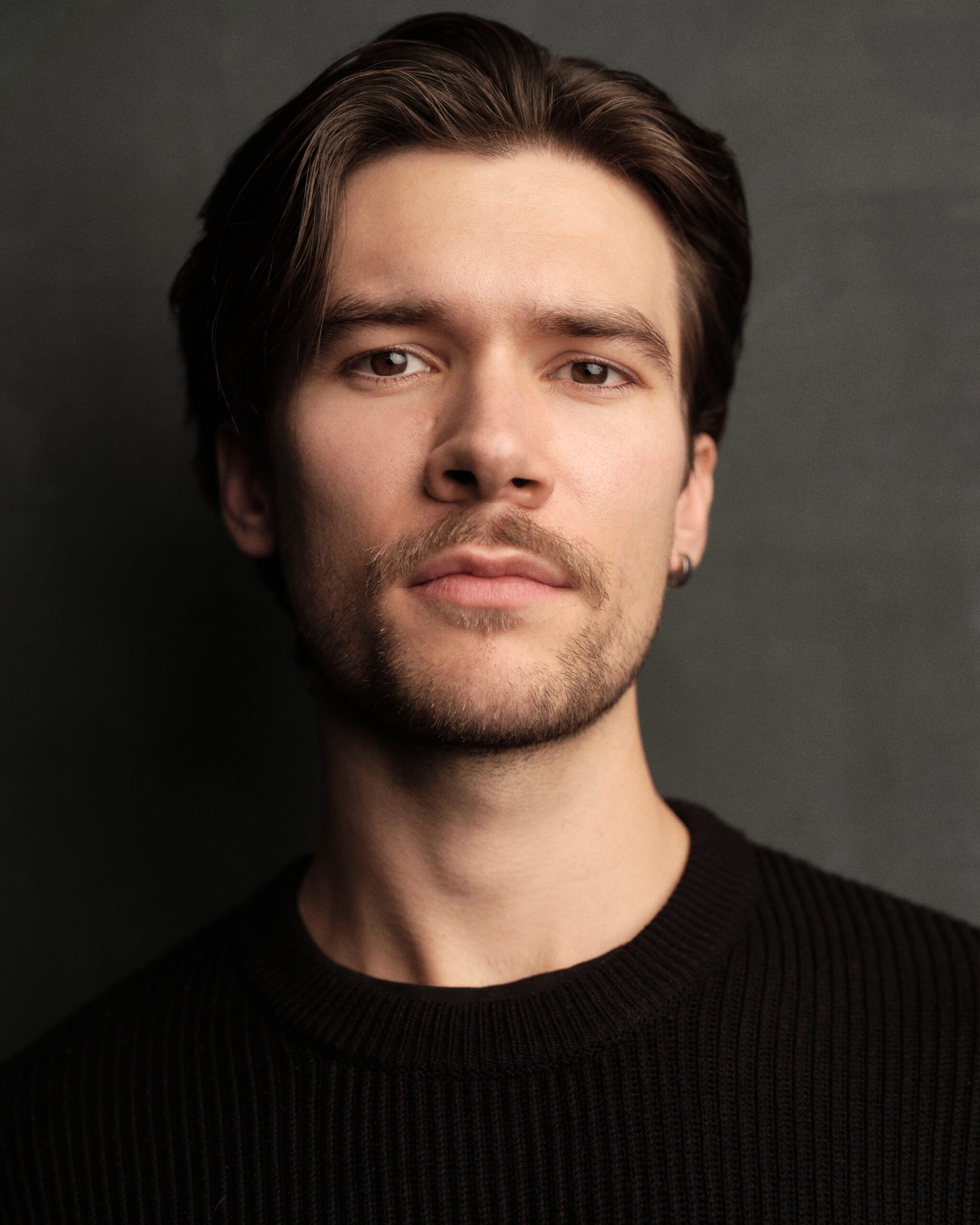
Bradley Peake / Image credit: Harry Livingstone
Do you ever get your agent involved in any of that?
From a contract point of view, yeah. But when you’re on set and narratively speaking, it’s something I’ve handled myself, because of how fast-paced and how last minute these things can be, you might not have actually read the full script. I did a vertical where the female lead who was acting opposite me had been cast at midnight the night before, and our very first scene was the intimacy scene. So it was, “Oh, nice to meet you,” and your characters are suddenly doing a very intense intimacy scene. So of course, if you have any concerns, you need to just flag it then and there and hopefully you’re working with a great team that will accommodate that.
There are quite a few moments where I have flagged things. It’s more from the male ‘icky moments’. There are maybe micro-aggressive moments from the male character, which I don’t like at all and don’t think is creatively or narratively warranted. I will vocalise that, and have done quite a few times whenever it’s crept up. Thankfully, whenever that’s happened, the director’s always been accommodating and the producers are like, “Yeah. We’ll change that. We’ll tweak it. Or we’ll do something else.” And you try to find a middle ground between what the clients want with that scene and then what you feel comfortable with doing.
There’s criticism about the lack of diversity and misogyny in scripts in the past. How have you seen scripts evolve in the two years you’ve been involved in verticals?
That was one of my biggest concerns when I started in this vertical filmmaking world. I was quite concerned because the first thing you do notice is that these stories aren’t maybe very diverse or outside the stereotypes or typical male stock characters.
Since my very first one, I’ve seen there have been loads of verticals now that are exploring not just heterosexual relationships, but also homosexual relationships, which has been great. There was a mafia vertical centred around these two guys and their romantic relationship, which was wonderful. They’re definitely expanding into different areas that, I think, will be incredibly welcomed from the wider industry and people wanting to get involved and definitely from an audience point of view.
My hope is that they keep it expanding. The scripts have changed but there are still a lot of dramas that are still in the traditional narrative context, but there are also now more and more that are developing outside of that.
QUOTE: “[Verticals] are just escapism in small micro hits that I think we can all relate to, especially when we have YouTube shorts and TikTok. It’s no different from that.”
How do you deal with an enthusiastic fan base whilst protecting your privacy?
It’s strange. I didn’t exactly leave drama school thinking, “Yeah. Vertical dramas.” Obviously, that wasn’t a thing in my consciousness, and still isn’t to many people. So suddenly there’s this whole world and people sending lovely messages. Some of the messages can maybe be on the verge of a bit intense, should I say? And there’ve been some that you open and really don’t know how to respond. I won’t go into details.
The weird thing is that a lot of the verticals don’t credit you. So I think the people who really love a particular show end up trying to work out who the actors are by doing their intensive research online, Batman style. I did my very first one, I’ll never forget, I went on a YouTube clip of it and there was a whole thread of different people trying to figure out who was playing the CEO character. And then one of the last comments were like, “I found him. His name is Bradley Peake.”
I remember thinking, “How did they find that?” Because you’re not credited, so they must have done some serious research. That’s actually why I verified my [Instagram] account early on. There were a couple of accounts that were fake versions of me. So I got the blue tick to make sure that if people are going to send a message, they know that’s definitely you.
So many of the fans are wonderful. They’re just people who love the dramas. It’s just great new content to absorb, people love them and really find escape in them. It’s just escapism in small micro hits that I think we can all relate to, especially when we have YouTube shorts and TikTok. It’s no different from that.
What work are you most proud of?
There’s no comparison. My short film, Pure, meant, and means, everything to me. It’s a very personal film. I started writing it as soon as I came out of drama school because in between acting auditions and tapes, my headspace was, “What else can I do?” And I wanted to just create this. It’s a love letter to a few different people and it deals with mental health and the nature of intimacy.
It was 16 months of a lot of everything. It took all my money, literally tens of thousands of pounds, and exhausted me in every kind of way, but it all built up to a wonderful night at Curzon Soho, where we had the premiere. It’s without doubt the most special night of my life. I don’t say that in any kind of hyperbolic sense.
What’s next for you?
Right now, there’s a few things that may or may not happen – the usual actor life of things. Currently, I’ve got a Mercedes-Benz commercial that is airing on the Great! Movie channels in association with Sky Cinema. It’s a 20-second ident that was a wonderfully fun day to shoot at the end of the summer.
I feel like I really would love to do a play because I haven’t done stage work since drama school. You get that itch. One of my, as I call it, muggle jobs is I’m a presenter around schools. And that scratches the itch slightly as you’re in front of people and presenting, but I’m definitely eager to do some stage work again.
There are some wonderful producers I met at Cannes this year. We’re currently trying to get a short film off the ground, called The Meat Rack. It’s written by a wonderful playwright called Paul Daley from Liverpool. And we have a great production team and we’re developing this project where I’m serving as creative producer, but gratefully playing or hopefully playing, the lead in the short that we want to turn into a feature.
What would you say to any performer who is hesitant about vertical drama?
I would say talk to your agent, if you have an agent. Talk to your peers and your friends. But ultimately, my opinion is if everything feels right with the production team and it feels like it’s got the right people attached to it, and there’s no immediate concerns, I’d say go for it. It’s a wonderful space.
There are always some bad examples in every aspect of the industry with maybe some productions that don’t go as well, but overall, they’re filled with incredible people who are really talented. People who are also just doing jobs, people who are from LFS, from NFTS [National Film and Television School], people in LA who are coming off of Disney shows and are now doing a vertical show because it’s work. So you’re surrounded by a cast and crew that are talented, creatively conscious, and want to make the best thing possible within the context of serving what the platform and the format requires.
You have so much fun. Honestly, I probably had the most fun on any shoot in the past two years without doubt on vertical dramas. I also met my beautiful partner whilst working on my first vertical!
When you’re blessed with great directors, crew and actors, you’re having a blast. It’s work and you get to challenge yourself in ways that maybe you didn’t quite expect or think about when you were first entering the industry. So go for it, but of course, follow your gut and talk to people around you.
Bradley Peake’s Top Tips for Navigating Vertical Dramas:
- Master quick memorisation: Be prepared to learn scripts with almost no lead time. Practice your memorisation techniques so you can absorb new dialogue quickly.
- Vocalise your boundaries: The speed of production can lead to last-minute changes. Always read the script thoroughly regarding intimacy or sensitive content. If something feels narratively ‘icky’ or unsafe, speak to the director or production team immediately.
- Treat every set as a networking hub: Don’t dismiss these shoots as ‘just’ mobile content. Many crew members are top-tier film school graduates. The person pulling focus today might be the cinematographer for your passion project tomorrow.
- Trust your gut on direct offers: While direct offers are a luxury, ensure you’ve seen the full script and are comfortable with the character’s journey before signing on, especially if the casting process was expedited.
Thank you, Bradley, for sharing your vertical drama experience with us!
Take a look at our website for more interviews and advice from casting directors.